Case studies
Double-Sided Printed Corrugated Boxes: Polybag Packing Risks
Can double-sided printed corrugated boxes with matte lamination and spot UV be packed in polybags? Explore a real case involving moisture and packing risks.
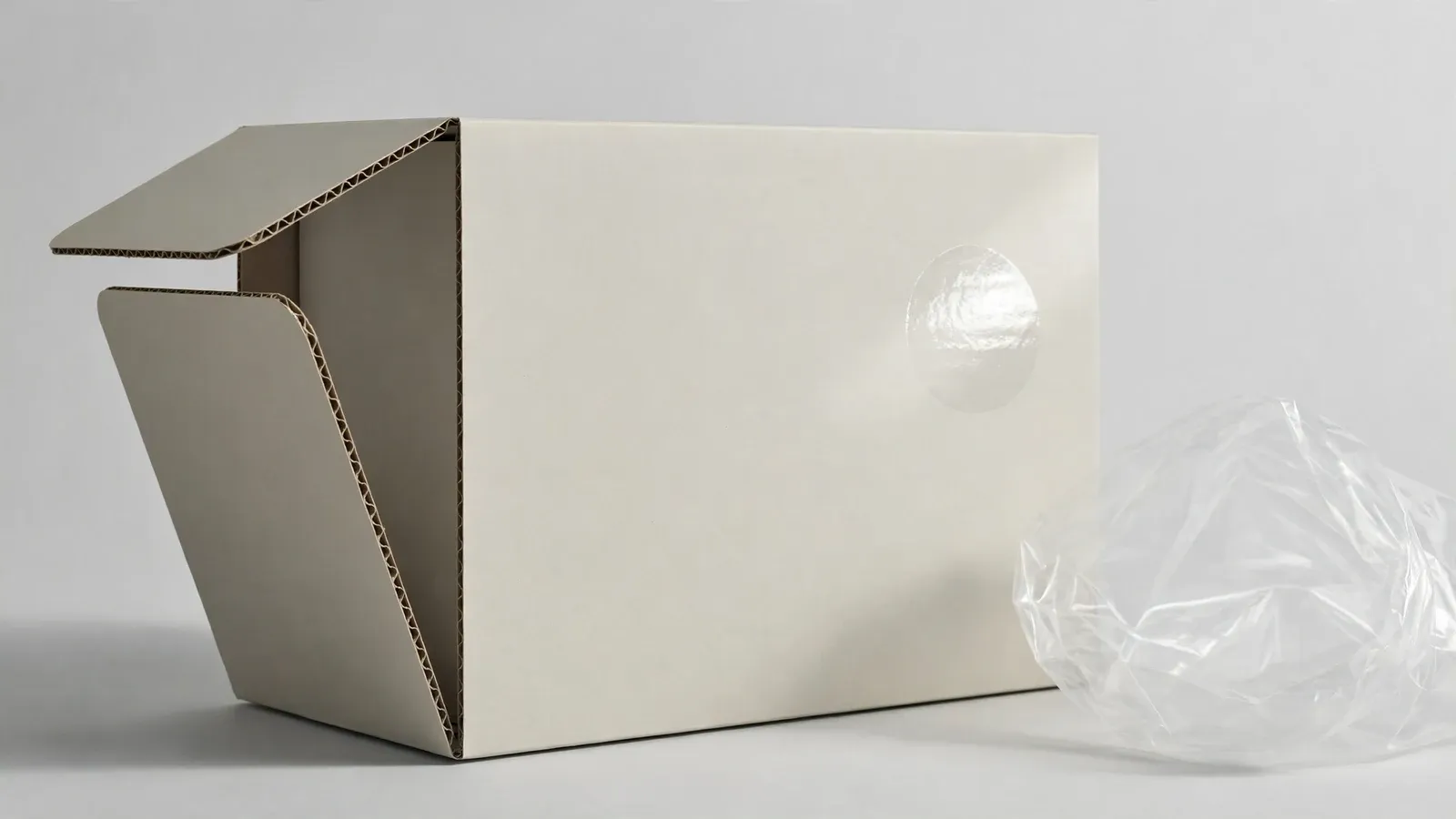
Can Double-Sided Printed Corrugated Boxes Be Packed in Polybags? A Real Case Study
A protective plastic bag seems like a simple way to keep custom packaging clean during storage and international shipping. But what happens when the boxes are printed on both sides, finished with matte lamination and spot UV, and packed before they have been properly conditioned?
This question came up during a recent custom corrugated packaging project at Cherubox Packaging.
Our production partner recommended avoiding polybag packing for the double-sided printed boxes because of concerns about retained moisture. However, similar boxes had been packed in plastic bags on previous orders without reported problems.
Rather than immediately changing the packing method, we discussed the risks and explored how to retain protective polybags while allowing more time before packing.
This case highlights an often-overlooked part of custom packaging quality control: the way finished boxes are packed can be just as important as how they are printed and produced.
The Project: Double-Sided Printed Corrugated Boxes With Premium Finishes
The project involved custom corrugated boxes with printing on both sides and additional surface finishing.
The packaging specifications included:
Specification | Project Details |
|---|---|
Packaging type | Custom corrugated boxes |
Printing | Double-sided printing |
Surface lamination | Matte lamination |
Special finishing | Spot UV |
Protective packing | Polybags |
Main concern | Moisture retention after production |
Unlike standard folding cartons made from a single layer of paperboard, corrugated boxes have a layered structure consisting of linerboard and a fluted medium.
This construction provides cushioning and structural strength, but it also makes moisture control important.
The paper components can absorb or release moisture depending on environmental conditions.
Changes in moisture content may affect the board's flatness, stiffness, dimensional stability, and overall performance.
For this project, the additional printing and finishing processes made the final packing arrangement worth reviewing.
Why the Supplier Recommended Avoiding Polybags
During our discussion, the supplier advised against immediately placing the finished corrugated boxes into plastic bags.
Their concern was that the boxes needed sufficient time for drying and moisture stabilization.
If the boxes were packed too early, the plastic bags could restrict moisture exchange with the surrounding environment.
Over time, this could create unfavorable conditions inside the packed bundles.
The supplier therefore recommended avoiding polybags for the double-sided printed boxes.
However, the recommendation raised an important question.
If the boxes have matte lamination and spot UV, why would moisture still be a concern?
The answer is that surface finishing does not make the entire corrugated structure moisture-proof.
Why Moisture Control Matters for Corrugated Boxes
Corrugated board is made from multiple paper layers bonded together.
A typical corrugated structure includes:
- An outer liner
- A fluted corrugated medium
- An inner liner
- Adhesive bonding the layers together
Depending on the box construction, additional fluted and liner layers may also be present.
These paper components respond to changes in humidity.
Moisture Can Affect Board Flatness
When paperboard absorbs or releases moisture unevenly, dimensional changes can occur.
This may contribute to curling or warping, particularly when the two sides of the board experience different conditions.
For premium printed corrugated boxes, visible deformation can affect both appearance and assembly.
Moisture Can Influence Structural Performance
Corrugated board strength depends partly on the condition of its paper components.
Excessive moisture can reduce stiffness and compression performance.
This matters when finished boxes must withstand stacking, handling, and transportation.
Double-Sided Printing Requires Additional Attention
Printing on both sides does not automatically mean the boxes contain excessive moisture.
However, printing, coating, lamination, and other converting processes may influence the moisture condition and handling requirements of the finished board.
For double-sided printed corrugated packaging, it is important to confirm that the boxes are ready for packing rather than assuming that the completion of printing means every material condition has stabilized.
Does Matte Lamination Prevent Moisture Problems?
Matte lamination creates a protective film layer over the printed surface.
It provides a smooth, low-gloss appearance and can help protect printed graphics against handling and surface abrasion.
However, matte lamination does not necessarily make a corrugated box waterproof.
The film changes the moisture barrier characteristics of the laminated surface, but other parts of the board may remain exposed.
These can include:
- Cut edges
- Die-cut openings
- Folded or creased areas
- Unlaminated surfaces
- Other exposed paper components
Moisture can still interact with these areas.
The lamination process itself may also have adhesive bonding or processing requirements that should be completed before final packing.
For this reason, a laminated corrugated box should not automatically be considered ready for immediate polybag packing.
What About Spot UV Finishing?
Spot UV is commonly used to create selective glossy areas on custom packaging.
When combined with matte lamination, it produces a visual contrast between matte and glossy surfaces.
For premium packaging, this can highlight logos, patterns, or other design elements.
Spot UV coatings are generally cured using ultraviolet light during production.
Proper curing is essential before further handling and packing.
However, UV curing should not be confused with natural drying.
If a UV coating has not been properly cured, simply leaving the boxes to sit for a longer period may not solve the problem.
The production team should verify the coating condition and curing process according to the materials and equipment being used.
For this project, the supplier's main concern was the overall moisture condition of the finished corrugated boxes—not a confirmed failure of the spot UV coating.
For more information about packaging finishes, read our Packaging Finishes Guide: Foil, Embossing, Spot UV & Lamination.
Can Polybags Trap Moisture Inside Corrugated Packaging?
Polybags are commonly used to protect finished packaging from dust, dirt, and handling contamination.
However, they can also restrict airflow and moisture exchange.
Polybags Do Not Have to Be Completely Airtight
A plastic bag does not need to be fully sealed to reduce airflow around a stack of boxes.
When corrugated boxes are tightly packed inside a bag, moisture exchange with the surrounding environment may become slower.
The actual effect depends on the bag material, whether it is sealed, and the storage conditions.
Moisture May Already Be Present in the Board
Corrugated board naturally contains moisture.
If the board is packed under unsuitable conditions, the moisture level inside the bag may remain elevated for longer than expected.
This does not mean every polybag will cause damage.
It means the board's condition should be considered before packing.
Temperature Changes Can Affect Humidity
During storage and international shipping, packaging may experience changes in temperature.
These changes can affect relative humidity inside the packing environment.
Under certain conditions, condensation may develop if moist air encounters a sufficiently cold surface.
For corrugated packaging, moisture-related changes can affect appearance and structural performance.
Potential Problems From Improper Packing
Depending on the materials and conditions, packing boxes too early may contribute to:
- Corrugated board warping
- Reduced board stiffness
- Surface sticking or blocking
- Unwanted odor retention
- Moisture-related appearance defects
- Changes in dimensional stability
These are potential risks associated with unsuitable conditions, not defects confirmed in this project.
Why We Wanted to Keep the Polybags
After hearing the supplier's recommendation, we reviewed the packing method used for previous orders.
The supplier confirmed that similar boxes had previously been packed in polybags.
Our customer had not reported moisture-related problems with those earlier shipments.
That history was useful, but it did not guarantee that the same method would be suitable for every production batch.
We also considered the benefits of retaining protective polybags.
Protection Against Dust and Dirt
For premium printed packaging, maintaining a clean surface is important.
Polybags can reduce exposure to dust and contamination during storage and handling.
Reduced Surface Contact
Protective bags can help separate finished packaging from surrounding packing materials.
This may reduce unwanted surface contact during transportation.
Consistency With Previous Packing Requirements
Maintaining a familiar packing method can simplify handling expectations for repeat orders.
However, consistency should not come at the expense of quality.
Rather than insisting on immediate polybag packing, we discussed whether the boxes could be given more time before being placed inside the bags.
Our Proposed Solution: More Conditioning Time Before Polybag Packing
After discussing the supplier's concerns, we agreed on a revised packing approach.
The plan was to allow the finished corrugated boxes additional time under suitable conditions before packing them into polybags.
We also discussed adding desiccants inside the bags to help manage humidity.
The proposed process included four steps.
Step 1: Complete Printing and Surface Finishing
All printing, lamination, and spot UV operations should be completed according to the required production processes.
The supplier should verify that the printed and finished surfaces are suitable for handling.
Step 2: Allow Appropriate Conditioning Time
Before packing, the finished boxes should be held under suitable environmental conditions where necessary.
The purpose is to allow the material to reach an appropriate condition for packing.
The required time depends on the board, inks, adhesives, coatings, and production environment.
A longer waiting period alone does not guarantee that the boxes are ready.
Step 3: Inspect the Finished Boxes
Before placing the boxes into polybags, the supplier should check for visible or functional issues such as:
- Warping or curling
- Surface tackiness
- Blocking between boxes
- Rubbing or marking
- Unusual odors
- Other finishing defects
If a problem is identified, its cause should be investigated before packing.
Step 4: Pack With Polybags and Appropriate Moisture Control
Once the finished boxes are confirmed suitable for packing, protective polybags may be used.
We also discussed placing desiccants inside the bags.
Desiccants can help manage humidity in a properly designed packing arrangement, but they cannot replace correct UV curing, adhesive processing, or board conditioning.
Their effectiveness depends on the bag material, enclosure conditions, storage environment, and appropriate desiccant selection.
The agreed direction was to retain polybag protection while allowing more time before packing and considering additional humidity control.
The available project discussion does not establish a completed storage test or final shipping outcome, so we would not describe this arrangement as a proven long-term solution without further verification.
What B2B Buyers Can Learn From This Case
This project illustrates several important lessons for buyers sourcing premium corrugated packaging.
1. Confirm the Packing Method Before Production
Protective packing requirements should be included in the original packaging specifications.
If polybags, desiccants, or special outer cartons are required, discuss them before production is completed.
2. Consider the Complete Material Structure
A laminated surface does not mean the entire corrugated board is moisture-proof.
The paper layers, cut edges, adhesive systems, and storage conditions still matter.
3. Don't Assume Previous Packing Methods Are Always Suitable
A packing method that worked previously may need to be reviewed when materials, production processes, or environmental conditions change.
4. Understand the Difference Between Drying and Curing
Ink drying, adhesive processing, UV curing, and paperboard moisture conditioning are different processes.
They should not be treated as interchangeable.
5. Balance Protection With Material Readiness
Protective bags are useful only when they are appropriate for the finished product.
The goal is to protect the boxes without introducing avoidable storage or handling risks.
Quality Control Checklist Before Packing Printed Corrugated Boxes
Before approving polybag packing for double-sided printed corrugated boxes, confirm:
- Printing on both sides is complete.
- Matte lamination has been properly processed.
- Spot UV coating has been correctly cured.
- Finished surfaces are free from tackiness or blocking.
- Corrugated board is in a suitable moisture condition.
- Boxes show no significant warping or deformation.
- Any required conditioning time has been completed.
- Polybag material and packing method are appropriate.
- Desiccant requirements have been evaluated if needed.
- Outer cartons provide suitable transportation protection.
- Storage and shipping conditions have been considered.
- Final packing specifications are confirmed before shipment.
For additional guidance on export packing, read our How to Prevent Shipping Damage to Custom Packaging.
Frequently Asked Questions
Can double-sided printed corrugated boxes be packed in polybags?
Yes. Double-sided printing does not automatically prevent polybag packing.
However, the boxes should be properly processed, conditioned, and inspected before packing, and the bag arrangement should be appropriate for the materials and storage conditions.
Does matte lamination make corrugated boxes waterproof?
No. Matte lamination changes the properties of the covered surface, but exposed paperboard areas can still absorb or release moisture.
Can spot UV cause boxes to stick together?
Improperly cured or unsuitable coatings may contribute to blocking or surface sticking.
The coating process and finished surface should be checked before stacking and packing.
Will leaving printed boxes to dry longer prevent moisture problems?
Not necessarily.
Additional conditioning time may be useful in some circumstances, but the correct approach depends on the materials and production processes.
It does not replace proper UV curing or adhesive processing.
Should desiccants be added to every polybag?
No. Desiccants should be selected based on the actual moisture-control requirements and packing conditions.
They are not automatically necessary for every corrugated packaging order.
Why might a supplier recommend avoiding polybags?
A supplier may be concerned about moisture retention, restricted airflow, surface condition, or storage conditions.
The specific reason should be clarified before changing the packing method.
Are polybags necessary for premium corrugated boxes?
Not always.
Their value depends on the printed surface, handling requirements, transportation conditions, and alternative protective packing options.
Final Thoughts
The final packing method is an important part of custom corrugated packaging quality control.
In this project, our production partner raised concerns about placing double-sided printed corrugated boxes with matte lamination and spot UV into polybags too soon.
Although similar boxes had been packed in polybags before, we reviewed the concern and discussed a more careful packing arrangement.
The proposed approach was to allow additional conditioning time, inspect the finished boxes, and then use protective polybags with suitable humidity-control measures where needed.
This case demonstrates why packaging quality requires attention beyond printing and finishing.
A well-designed box still needs an appropriate packing method to maintain its appearance and performance during storage and transportation.
Need Help With Custom Corrugated Packaging?
Cherubox Packaging helps brands, importers, and wholesale buyers coordinate custom corrugated packaging projects, including structural design, double-sided printing, premium finishes, quality control, and export packing.
Whether you need custom printed mailer boxes, matte lamination, spot UV, or special protective packing, we can help review your requirements and coordinate practical solutions.
Share your box type, dimensions, material, printing finishes, quantity, and shipping destination.