Oct 27, 2026Case studies
Why Multiple Packaging Designs Cost More: Case Study
Why can ten packaging designs cost more than one, even at a higher total quantity? Explore printing plates, spot UV setup, and multi-SKU pricing.
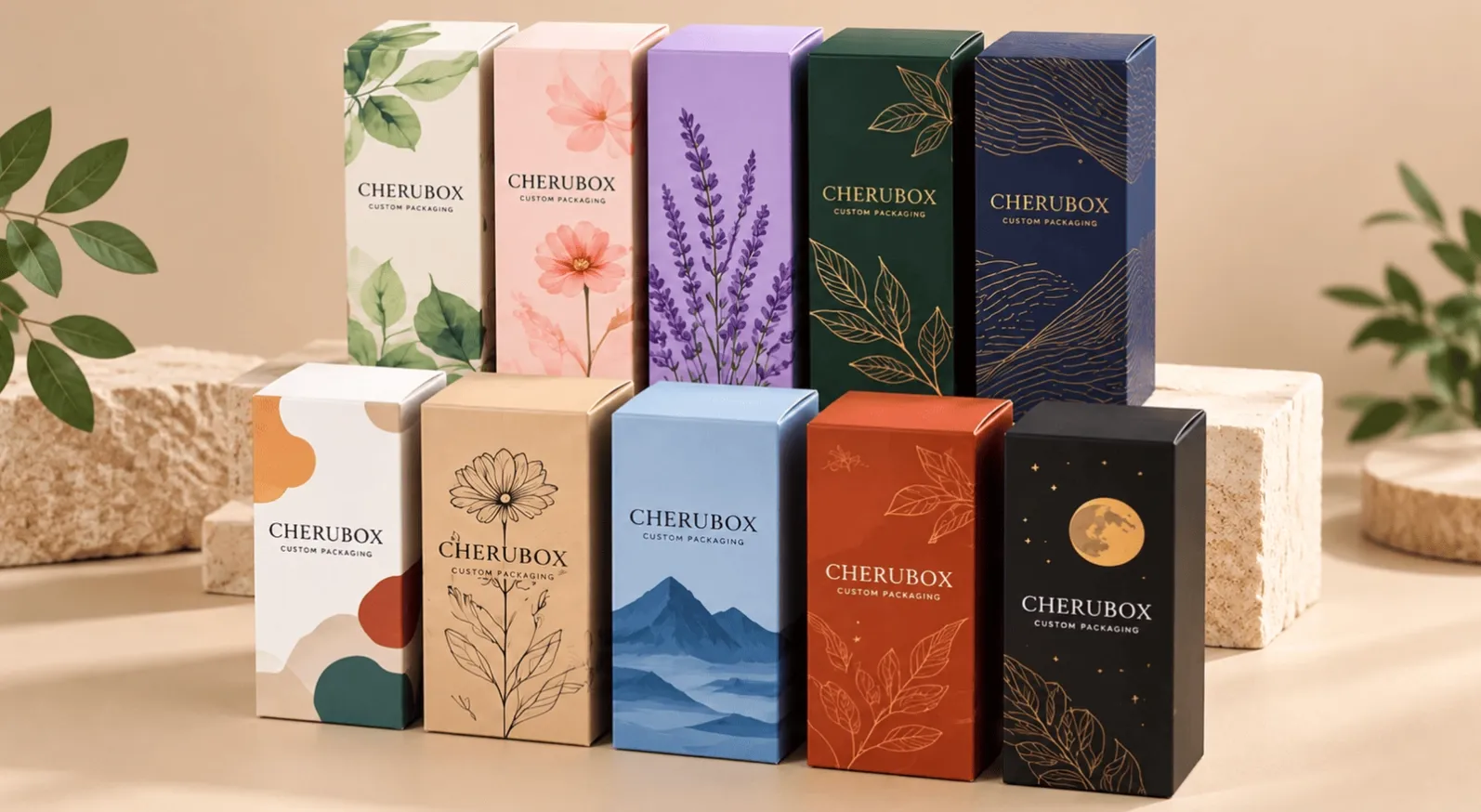
Why Custom Packaging Costs More Across Multiple Designs: A Real B2B Pricing Case Study
Same box structure. Higher total quantity. Why is the price still higher?
This is a common question when brands order custom packaging for multiple products, flavors, fragrances, or product variations.
A buyer may assume that increasing the total order quantity should automatically reduce the unit price.
But in custom printed packaging, the total number of boxes is only one part of the pricing calculation.
The number of different designs also matters.
At Cherubox Packaging, we encountered this situation when a customer requested updated pricing for a packaging project that changed from a single design to multiple printed variations.
Although the total quantity increased, the revised project required additional printing preparation and spot UV tooling.
This case study explains why multiple packaging designs can increase production costs, how quantity per design affects pricing, and what B2B buyers should consider when planning multi-SKU packaging orders.
The Original Quotation: One Design at Different Quantities
The initial quotation was prepared for one packaging design.
The customer requested pricing based on quantities of:
- 600 pieces
- 1,000 pieces
The quotation reflected the production requirements for a single artwork design.
When a packaging supplier calculates pricing for one design, the setup costs can be allocated across the quantity produced using that artwork.
For example, a single design may require:
- Artwork preparation
- Printing plates
- Press setup
- Spot UV tooling
- Color adjustments
- Production inspection
Some of these costs are relatively fixed for a given production setup.
As the quantity increases, the fixed setup cost per box may decrease.
This is one reason why larger quantities often receive lower unit prices.
The Change: From One Design to Ten Designs
Later, the project requirements changed.
Instead of producing one design, the customer wanted ten different designs.
The requested quantities were approximately:
- 200 pieces per design
- 400 pieces per design
That created two possible total order quantities:
Project Version | Number of Designs | Quantity per Design | Total Quantity |
|---|---|---|---|
Original option A | 1 | 600 | 600 |
Original option B | 1 | 1,000 | 1,000 |
Revised option A | 10 | 200 | 2,000 |
Revised option B | 10 | 400 | 4,000 |
At first glance, the revised quantities appear more attractive.
The customer is now ordering 2,000 or 4,000 boxes rather than 600 or 1,000.
However, each of the ten designs requires its own artwork-related production preparation.
The total quantity increased, but the quantity produced under each individual design became smaller.
That difference is important.
Why More Designs Can Increase Packaging Costs
Custom packaging pricing is influenced by both variable production costs and setup-related costs.
Variable costs may include paperboard, ink consumption, finishing materials, and other expenses that change with production quantity.
Setup-related costs may include plates, tooling, artwork preparation, press adjustments, and production changeovers.
When a project includes multiple designs, some setup requirements may need to be repeated.
Printing Plates May Be Different for Each Design
In conventional offset printing, different printed artwork generally requires different printing plates.
Even when all boxes use the same structure and dimensions, changing the graphics can create additional plate requirements.
For example, ten designs with different logos, illustrations, or printed backgrounds may require separate plate sets.
The exact requirements depend on the printing process and artwork.
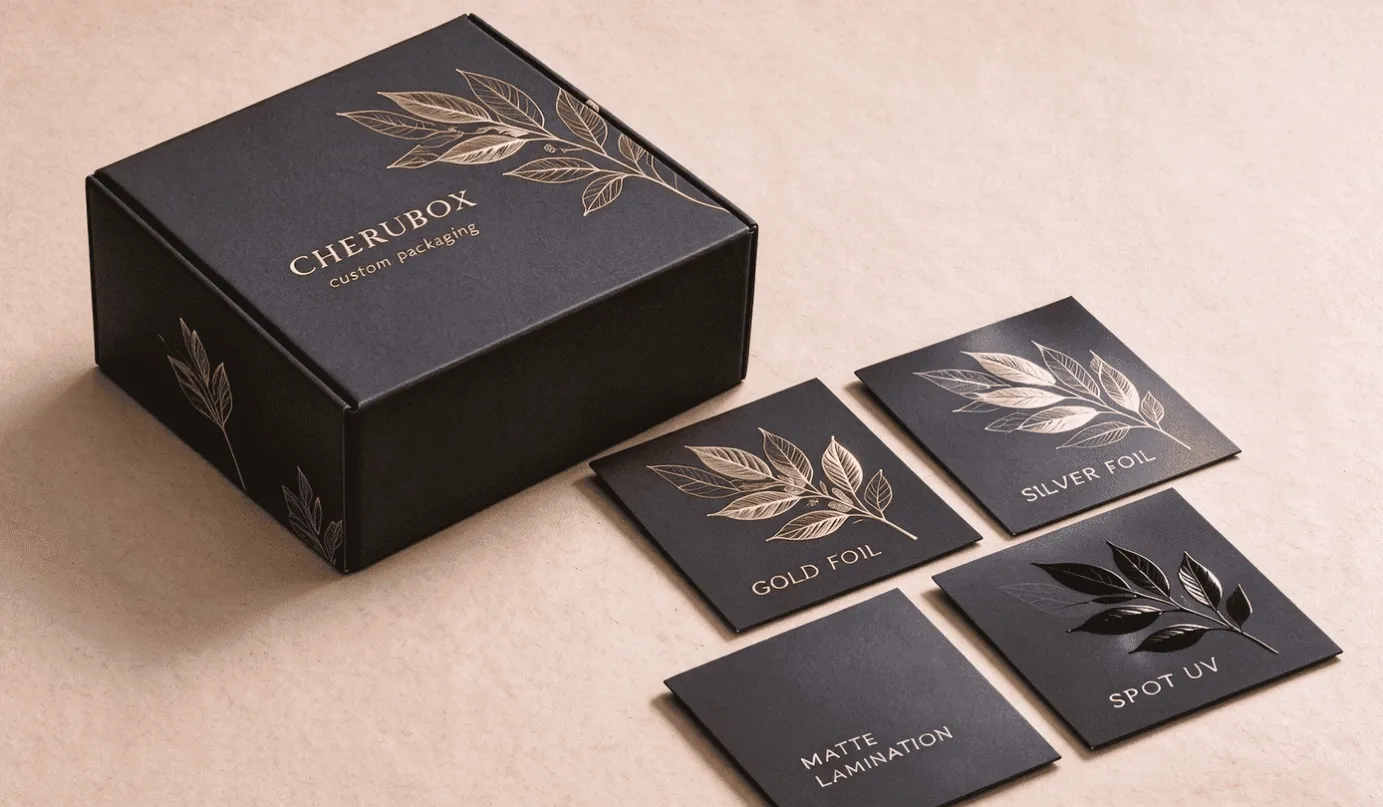
Spot UV Artwork Can Require Separate Tooling
Spot UV is applied selectively to designated areas of the packaging.
If the spot UV pattern changes between designs, separate coating plates, screens, or other process-specific preparation may be required.
For this customer project, additional spot UV plate requirements were part of the cost discussion.
A design with spot UV on one logo cannot automatically use the same selective coating setup for a different logo or layout.
Production Changeovers Add Complexity
Switching between designs may require:
- Changing printing plates
- Adjusting registration
- Checking colors
- Preparing different finishing patterns
- Separating finished quantities by SKU
- Conducting design-specific quality checks
The exact production arrangement depends on the equipment and printing method.
These additional requirements can affect cost even when the box structure remains unchanged.
Total Order Quantity vs. Quantity per Design
For multi-design packaging projects, buyers should distinguish between two measurements.
Total order quantity: The combined number of boxes across all designs.
Quantity per design: The number of boxes produced using each individual artwork.
These are not interchangeable when calculating printing costs.
Consider two hypothetical projects:
Project A: 4,000 boxes with one design.
Project B: 4,000 boxes across ten designs, with 400 boxes per design.
Both projects contain 4,000 boxes.
However, Project B may require additional artwork preparation, printing plates, finishing setups, and production changeovers.
Therefore, the unit price may be different.
Key takeaway: A higher total order quantity does not guarantee a lower unit price when the number of designs also increases.
A Simple Example of How Setup Costs Affect Unit Price
The following example uses hypothetical numbers to illustrate the pricing principle. It is not a quotation from the actual customer project.
Assume a production setup costs $100 per design.
Scenario | Designs | Total Quantity | Illustrative Setup Cost | Setup Cost per Box |
|---|---|---|---|---|
One design | 1 | 4,000 | $100 | $0.025 |
Ten designs | 10 | 4,000 | $1,000 | $0.25 |
The total quantity is identical.
But if each design requires a separate $100 setup, the setup cost allocated to each box increases significantly.
Actual packaging quotations may include shared tooling, combined production efficiencies, different printing methods, or other adjustments.
The example simply demonstrates why the number of designs can materially affect pricing.
Can Multiple Designs Share the Same Box Dieline?
Yes.
If all packaging designs use the same finished dimensions and structural layout, they may be able to share the same cutting die.
This can help reduce structural tooling costs.
However, sharing a cutting die does not mean every production cost can be shared.
The following elements should be considered separately:
Production Element | Can It Be Shared Across Designs? |
|---|---|
Box structure | Often, if dimensions and construction are identical |
Cutting die | Often, if the dieline is identical |
Printing plates | Depends on the artwork and printing method |
Spot UV tooling | Depends on whether the selective coating pattern is identical |
Foil stamping tooling | Depends on the foil artwork and process |
Paperboard material | Often, if specifications are identical |
Production setup | May require additional changeovers |
Quality inspection | Each design still needs appropriate checks |
For B2B buyers, this distinction helps explain why two boxes with the same structure may still have different production costs.
How to Reduce Costs When Ordering Multiple Packaging Designs
Multiple designs do not automatically make a project uneconomical.
The key is to plan the artwork, quantities, and production requirements together.
Standardize the Box Structure
Whenever practical, use the same dimensions and structural dieline across related products.
This may allow multiple SKUs to share cutting tooling and packaging specifications.
Simplify Design-Specific Finishes
Consider whether every SKU needs unique spot UV or foil stamping artwork.
If a decorative finish can remain consistent across designs, there may be opportunities to simplify production preparation.
Any potential savings should be confirmed against the actual printing method.
Compare Quantity Breaks per Design
Request pricing at different quantities per artwork.
For example:
- 200 pieces per design
- 400 pieces per design
- 600 pieces per design
- 1,000 pieces per design
The most economical option may depend on the number of designs and the intended inventory plan.
Review Whether CMYK Is Sufficient
Some designs may not require additional spot colors or decorative finishes.
Using standard CMYK printing where appropriate may reduce production complexity.
However, changes should not compromise essential brand requirements.
Plan SKU Demand Before Ordering
Avoid distributing quantities evenly across all designs unless demand is expected to be similar.
A high-demand SKU may justify a larger production quantity, while a slower-moving SKU may require a smaller run.
This can improve inventory planning and help control total packaging expenditure.
Ask for a Clear Multi-Design Quotation
When requesting prices, provide the number of designs and quantity per design from the beginning.
For example:
"10 designs, 400 pieces per design, 4,000 pieces total, with the same box structure and matte lamination plus spot UV."
This is more useful than simply requesting a quotation for 4,000 boxes.
What We Explained to the Customer
In this project, the customer questioned the higher pricing after the quantity increased.
We explained that the original quotation had been based on one design at 600 or 1,000 pieces.
The revised project involved ten designs at 200 or 400 pieces each.
Although the combined quantity was higher, the additional printing plates and spot UV plates increased production requirements.
The pricing therefore could not be evaluated using the total quantity alone.
The available project information documents the quotation discussion but does not establish a final accepted price or completed production outcome.
The lesson is that packaging pricing should account for both the overall order volume and the individual artwork quantities.
Multi-Design Packaging Quotation Checklist
Before requesting a quotation for multiple packaging designs, confirm:
- Total number of designs or SKUs
- Quantity required for each design
- Total combined order quantity
- Whether all designs use the same box structure
- Whether the cutting dieline is identical
- Paperboard material and thickness
- CMYK and Pantone printing requirements
- Spot UV artwork for each design
- Foil stamping artwork for each design
- Lamination and other surface finishes
- Whether separate printing or finishing setups are required
- Packaging and labeling requirements for each SKU
- Expected repeat-order quantities
For additional purchasing guidance, read our How Much Do Custom Packaging Boxes Cost? Pricing Guide.
Frequently Asked Questions
Why does custom packaging cost more with multiple designs?
Different artwork may require additional printing plates, finishing tooling, press setup, and production changeovers.
These costs can increase even when the total order quantity is higher.
Can ten designs share the same box cutting die?
Often yes, provided the box dimensions and structural dieline are identical.
However, printing and finishing requirements may still differ between designs.
Is 4,000 boxes across ten designs the same price as 4,000 boxes with one design?
Not necessarily.
The total quantity is the same, but the quantity per design and number of production setups may be different.
Does every design need a separate spot UV plate?
Not always.
It depends on the spot UV pattern, printing method, and production equipment.
If the selective coating artwork differs between designs, additional tooling or setup may be necessary.
Can I combine different designs to meet the minimum order quantity?
Some suppliers allow combined orders, but the minimum quantity per design and applicable setup charges should be confirmed.
A combined total quantity does not automatically satisfy every production requirement.
How can I get a more accurate quotation for multiple SKUs?
Provide the box dimensions, structure, material, finishing requirements, total number of designs, and quantity per design.
If possible, share representative artwork for each design.
Final Thoughts
Ordering more packaging boxes does not always mean paying less per box.
When a project changes from one design to ten designs, the production requirements can change substantially.
Our customer case illustrates why increasing the total order quantity from a single-design quotation to a multi-design project did not automatically result in lower pricing.
Printing plates, spot UV tooling, production setup, and quantity per artwork all matter.
For brands, distributors, and wholesalers managing multiple SKUs, the most effective approach is to plan the number of designs and quantities together before requesting a quotation.
In custom packaging, total quantity matters—but quantity per design matters too.
Need a Quote for Multiple Custom Packaging Designs?
Cherubox Packaging helps brands and wholesale buyers coordinate custom packaging projects involving multiple SKUs, shared box structures, different artwork designs, and specialty printing finishes.
Share your box dimensions, material, finishing requirements, number of designs, and quantity per design. We can help review the production requirements and prepare suitable quotation options.