
Oct 27, 2026Case studies
Urgent Custom Packaging: Split Shipping Case Study
Need custom packaging urgently? Explore a real 5,000-box project and how split air and sea shipping can balance delivery deadlines and freight costs.
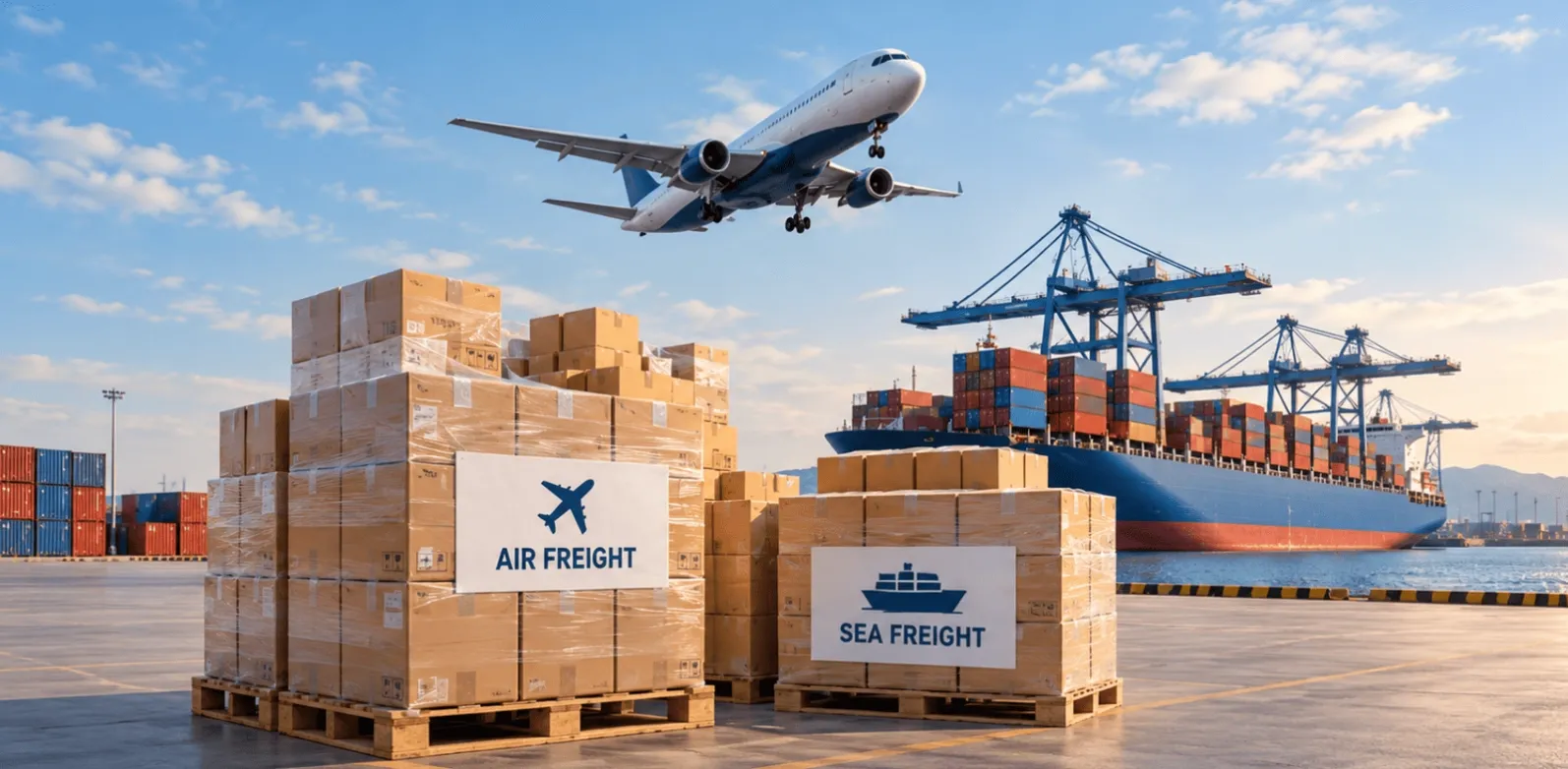
Urgent Custom Packaging Orders: How Split Shipping Can Help Meet Tight Deadlines
A customer needs 5,000 custom packaging boxes in 21 days. Does every box really need to arrive at the same time?
For B2B packaging buyers, urgent deadlines can create a difficult balance between production speed, international freight costs, and inventory requirements.
Air freight may offer a faster transportation option, but shipping an entire bulk order by air can be expensive.
Sea freight is often more economical for larger quantities, but its longer transit time may not support an urgent launch.
A third option is to divide the shipment.
In a Cherubox Packaging customer project, the buyer requested quotations for several quantities of custom packaging boxes with a 21-day delivery requirement.
Rather than considering only full-order air freight, the customer also discussed a plan to ship 2,000 boxes by air and 3,000 boxes by sea.
This case study explores the reasoning behind that approach, the production and logistics details that need to be checked, and how packaging buyers can evaluate split shipping for time-sensitive orders.
The Challenge: 5,000 Custom Boxes Needed Within 21 Days
The project involved a customer requesting custom packaging with a particularly tight delivery timeline.
The stated requirement was approximately 21 days.
For an overseas custom packaging order, that timeline can be challenging because it may need to cover several stages:
- Final artwork and sample confirmation
- Production scheduling
- Printing and finishing
- Die-cutting and assembly
- Quality inspection
- Export preparation
- International transportation
- Customs clearance and final delivery
Even if production can be completed quickly, transportation time can become a major constraint.
The customer requested pricing for different quantities and shipping arrangements.
A potential solution was to divide the 5,000-box requirement into two shipments:
Shipment | Quantity | Proposed Method | Purpose |
|---|---|---|---|
Priority shipment | 2,000 boxes | Air freight | Support the earliest packaging requirements |
Remaining shipment | 3,000 boxes | Sea freight | Reduce freight expense for inventory that may be needed later |
Total | 5,000 boxes | Split shipping | Balance urgency and cost |
This was a proposed shipping strategy, not a confirmed completed delivery.
The key question was whether the customer genuinely needed all 5,000 boxes within 21 days—or only enough inventory to support the immediate production or launch schedule.
Why Shipping Every Box by Air May Not Be Necessary
Air freight can be valuable when a business faces an urgent packaging shortage.
However, packaging boxes are often relatively bulky compared with their weight.
Freight charges may therefore be influenced significantly by the space the shipment occupies.
For many international air freight services, carriers compare actual weight with volumetric weight and charge according to the applicable billing rules.
This can make bulk shipments of assembled or space-consuming packaging expensive.
If only a portion of the order is required immediately, shipping the full quantity by air may create unnecessary freight expense.
Identify the Immediate Packaging Requirement
Before selecting a shipping method, buyers should ask:
- How many finished products will be packed during the first week?
- How many boxes are needed for the initial launch?
- Is there existing packaging inventory?
- When will the remaining inventory actually be used?
- Can production continue while the second shipment is in transit?
These questions help determine whether a smaller priority shipment can support operations.
Separate Urgent Inventory From Replenishment Inventory
An urgent order often contains two different needs.
Immediate inventory supports production, customer commitments, or a product launch.
Replenishment inventory supports later sales or ongoing packing operations.
Treating these quantities separately may create more flexibility.
Our Proposed Approach: 2,000 Boxes by Air and 3,000 by Sea
In this project, the customer discussed a split-shipping arrangement.
The proposed plan was straightforward:
Ship 2,000 boxes by air to address the immediate requirement.
Ship the remaining 3,000 boxes by sea to reduce the cost of transporting the full order.
The approach was intended to balance delivery urgency with freight efficiency.
However, split shipping is useful only when the slower shipment can arrive before the remaining inventory is needed.
If all 5,000 boxes are required within the same 21-day window, shipping 3,000 boxes by sea may not solve the customer's deadline problem.
The correct shipping arrangement depends on the actual inventory consumption schedule.
Production Timing: Why a 21-Day Deadline Needs Careful Planning
The proposed production discussion included an accelerated schedule after sample confirmation.
The working target was approximately:
- 7 days for production
- 14 days reserved for transportation
Together, these periods represented the customer's 21-day target.
However, this was a planning target rather than a guaranteed door-to-door delivery schedule.
Production and transportation timing depend on several factors.
Sample and Artwork Approval
Production should not be scheduled on the assumption that artwork and samples are approved if confirmation is still pending.
Changes to structure, materials, printing, or finishes may affect the schedule.
Production Capacity
A factory may be able to prioritize an urgent project, but actual lead time depends on equipment availability, order complexity, and material readiness.
A simple folding carton may have a different production timeline from a rigid box requiring multiple finishing and assembly processes.
Quality Inspection
A compressed timeline should still allow appropriate checks.
Shipping defective packaging quickly does not solve the customer's problem.
International Transit and Customs
An estimated air transit time is not the same as a guaranteed final delivery date.
Export handling, flight availability, customs processing, local delivery, and unexpected disruptions may affect arrival.
Practical lesson: Work backward from the customer's required delivery date and allow for both production and logistics uncertainty.
How to Calculate the Quantity That Should Ship by Air
The priority shipment should be based on the customer's expected packaging consumption—not an arbitrary percentage of the total order.
A useful starting calculation is:
Priority Quantity = Expected Packaging Consumption Before Sea Shipment Arrives + Safety Stock − Available Inventory
For example, consider a hypothetical business that expects to use 400 boxes per week.
If the remaining shipment is expected to arrive after five weeks, the business would need approximately 2,000 boxes during that period, before accounting for safety stock and any available inventory.
That does not mean every customer should ship 2,000 boxes by air.
The appropriate quantity depends on:
- Weekly packaging consumption
- Current inventory
- Product launch schedule
- Confirmed customer orders
- Expected arrival of the slower shipment
- Acceptable risk of a packaging shortage
The goal is to ship enough inventory to protect operations without unnecessarily increasing freight costs.
Compare the Total Cost, Not Just the Freight Rate
Split shipping may reduce the freight cost of an urgent order, but it also creates additional logistics considerations.
Buyers should compare the complete landed cost of each option.
Cost Factor | Full Air Shipment | Split Air and Sea Shipment |
|---|---|---|
Air freight expense | Applies to full quantity | Applies to priority quantity |
Sea freight expense | Usually none | Applies to remaining quantity |
Shipment handling | One shipping arrangement | Two shipping arrangements |
Customs and destination charges | Based on the chosen service | May apply separately to each shipment |
Inventory arrival | More concentrated | Arrives in stages |
Stockout exposure | Depends on air delivery reliability | Depends on priority quantity and sea arrival |
Administrative coordination | Generally simpler | Requires additional tracking |
A split shipment does not automatically produce the lowest total cost.
Separate shipment minimums, customs charges, and destination fees may offset some freight savings.
Buyers should request complete quotations for each scenario before deciding.
Packaging Design Can Also Affect Shipping Costs
Freight planning should begin before the boxes are packed into master cartons.
Packaging structure can influence shipping volume.
Flat-Packed Folding Cartons
Folding cartons are often shipped flat, which can reduce transportation volume.
However, the packing method must protect printed surfaces and prevent damage.
Rigid Boxes
Fully assembled rigid boxes may occupy more shipping space.
Some collapsible rigid box designs can reduce shipping volume, but they may require additional assembly at the destination.
Master Carton Dimensions
Carton dimensions affect loading efficiency and volumetric weight.
The number of boxes packed per carton should be reviewed together with carton strength and damage prevention.
Protective Packaging
Reducing shipping volume should not come at the expense of adequate protection.
Weak cartons or insufficient internal support can increase the risk of damaged packaging during transportation.
When Split Shipping Is a Good Option
Split shipping may be worth considering when:
- Only part of the order is needed immediately.
- The customer has a predictable packaging consumption schedule.
- Air freight for the entire order is disproportionately expensive.
- The remaining inventory can arrive later without interrupting operations.
- The supplier can coordinate separate packing and shipping arrangements.
- The savings justify any additional logistics charges.
It may be less suitable when every box is needed by the same deadline or when splitting the order creates excessive minimum freight charges.
A Checklist for Urgent Custom Packaging Orders
Before approving an urgent international packaging order, confirm:
- The exact quantity required by the earliest deadline.
- The total quantity required for the project.
- Final artwork and sample approval status.
- Confirmed production requirements.
- Estimated production completion date.
- Quantity proposed for air freight.
- Quantity proposed for sea freight.
- Estimated transit and final delivery windows.
- Freight charges and destination fees for each shipment.
- Master carton packing details.
- Customs and delivery responsibilities.
- A contingency plan if either shipment is delayed.
Frequently Asked Questions
Can custom packaging boxes be delivered within 21 days?
Some projects may support an accelerated schedule, but feasibility depends on box structure, printing, finishes, order quantity, production readiness, destination, and shipping method.
A 21-day delivery window should not be assumed without project-specific confirmation.
Is it cheaper to split packaging shipments between air and sea?
It can be, especially when only a smaller quantity is urgently required.
However, buyers should compare total freight and destination charges rather than assuming a split shipment will always save money.
How many boxes should I ship by air?
The quantity should be based on expected packaging consumption before the slower shipment arrives, plus appropriate safety stock and less any existing inventory.
Can the same packaging order be shipped in two batches?
Often yes, provided production, packing, export documentation, and logistics arrangements support the plan.
The details should be confirmed before shipment.
Does split shipping affect packaging quality?
Using two transportation methods does not inherently change packaging quality, but each shipment should be packed appropriately for its route and handling conditions.
Should I choose the fastest sea freight option?
That depends on the inventory deadline and the difference in freight cost.
If the remaining boxes are not needed urgently, a slower service may be practical. If the inventory schedule is tight, a faster service may reduce stockout risk.
Final Thoughts
Urgent custom packaging orders are not always solved by choosing the fastest transportation method for the entire shipment.
Sometimes the better question is:
How many boxes does the customer actually need first?
In this project, a 21-day requirement for 5,000 boxes led to a discussion about shipping 2,000 boxes by air and 3,000 by sea.
The plan illustrated a practical way to separate immediate packaging needs from later inventory requirements.
Although the available project records do not confirm the final shipping arrangement or delivery outcome, the decision-making process offers a useful lesson for B2B packaging buyers.
When production deadlines are tight, coordinating order quantities, freight methods, and inventory timing can be just as important as the box manufacturing process.
Need Help Planning an Urgent Custom Packaging Order?
Cherubox Packaging helps brands, importers, and wholesale buyers coordinate custom packaging production and international shipping arrangements.
Share your box specifications, quantity, delivery destination, and required arrival date. We can help evaluate production requirements and available shipping options.