Aug 6, 2026Buying Guides
Why Does Pantone Color Printing Cost Extra for Custom Packaging? Complete B2B Guide
Wondering why Pantone printing adds extra fees to custom packaging orders? Learn how Pantone setup costs work, single vs double-side pricing, and actionable tips to cut packaging expenses.
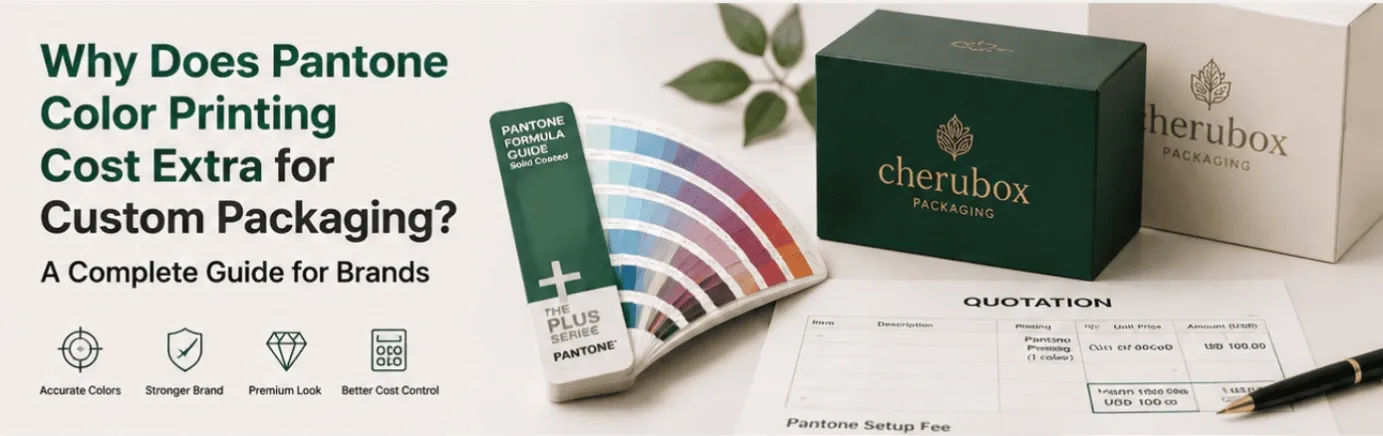
Why Does Pantone Color Printing Cost Extra for Custom Packaging? A Complete Guide for Brands
When budgeting for custom packaging, most brands prioritize box structure, paper materials, and premium finishing options. However, Pantone color printing often brings unexpected additional fees, leaving many B2B buyers confused.
The most frequent question we receive from packaging clients is straightforward:“My design only uses one Pantone color — why am I charged an extra printing fee?”
This confusion is completely reasonable. For small to mid-sized brands and businesses with tight profit margins, unclear packaging pricing structures can disrupt product budgeting and overall project planning. Many buyers mistakenly assume Pantone fees are calculated solely based on ink consumption and color quantity.
The core truth most packaging suppliers fail to explain clearly:
Pantone printing extra costs come primarily from production setup procedures, not ink usage. Pricing depends on both the number of Pantone colors and the number of printing sides.
In this comprehensive guide, we break down how Pantone printing fees work, clarify single vs double-side pricing rules, and share practical strategies to help brands accurately budget and reduce unnecessary custom packaging costs.
What Is Pantone Color Printing for Custom Packaging?
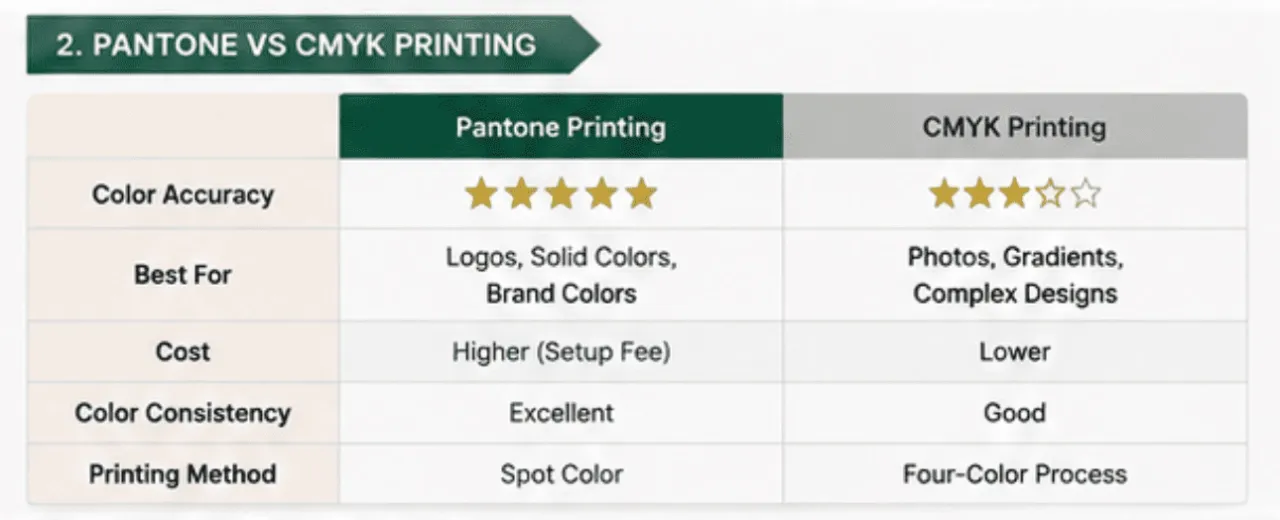
Pantone color printing relies on the standardized Pantone Matching System (PMS), a universal color calibration system designed to deliver consistent, identical color results across different batches, printing machines, and production cycles.It differs fundamentally from conventional CMYK printing, which generates all colors by mixing four base inks: Cyan, Magenta, Yellow, and Key (Black).
Instead of color mixing, Pantone printing uses pre-mixed spot color inks. Each shade corresponds to a unique Pantone reference code, eliminating color deviation and ensuring uniform branding across all assets.
Commonly used packaging Pantone color codes include:
- Pantone 3435 C (dark green)
- Pantone 186 C (vibrant brand red)
- Pantone 286 C (deep corporate blue)
This standardized color system is ideal for replicating precise brand hues on logos, custom packaging, and official marketing materials, making it a top choice for premium brand packaging.
Pantone Spot Color Printing vs CMYK Printing: Key Differences
Choosing between Pantone and CMYK printing depends entirely on your packaging design complexity and branding requirements. Each method has unique advantages and ideal use cases for custom boxes.
Printing Method | Core Advantages | Best Applications |
|---|---|---|
CMYK Printing | Cost-effective, supports full-color gradients, complex artwork, and photographic details | Product photos, illustrated designs, multi-gradient artwork, casual retail packaging |
Pantone Printing (Spot Color) | Industry-leading color accuracy, zero batch-to-batch deviation, solid and vibrant color output | Brand logos, solid color blocks, signature corporate hues, luxury premium packaging |
CMYK + Pantone Hybrid Printing | Combines full-color imagery and precise brand color matching | High-end branded packaging with both product photography and fixed logo colors |
For example, a premium skincare brand typically uses CMYK printing for lifelike product imagery on packaging, while applying dedicated Pantone spot colors for brand logos to maintain consistent brand identity globally.
Why Does Pantone Printing Incur Extra Fees? (The Real Cost Reason)
Most packaging buyers misunderstand Pantone pricing. They believe extra charges come from expensive specialty ink, but
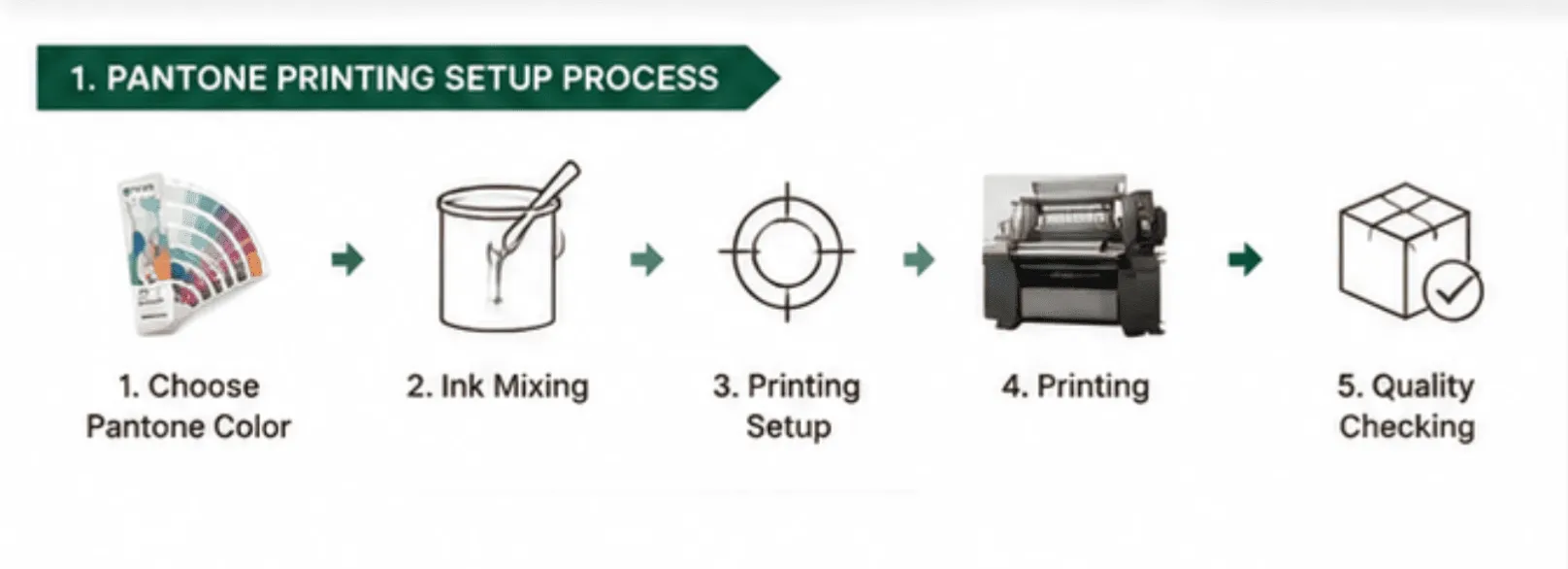
ink cost is only a tiny fraction of the total fee. The majority of additional expenses stem from manual and machine setup labor.Unlike CMYK printing, which uses pre-loaded standard inks, every individual Pantone spot color requires a full independent production setup workflow:
- Custom manual ink mixing per exact Pantone code
- Dedicated printing plate creation and installation
- Professional machine calibration and position adjustment
- Precision color matching and sample testing
- Full pre-production quality verification
These time-consuming, labor-intensive steps extend production preparation time significantly. For this reason, Pantone additional fees are classified as one-time setup costs, not per-unit ink costs.
How Pantone Printing Costs Are Calculated: Color Quantity vs. Printing Sides
The biggest pricing misconception among B2B buyers is: “One Pantone color equals one setup fee.”This rule only applies to single-sided printing. The accurate Pantone pricing formula for custom packaging is:
Total Pantone Setup Fee = Number of Pantone Colors × Number of Printing Sides × Single Setup Cost
Example 1: Single-Side Pantone Printing
Project requirements: 1 Pantone brand color, printing only on the exterior front side of the box
Production setup: Only one independent machine calibration and printing run is needed
Calculation: 1 Side × $50 Standard Setup Fee = $50 Total Pantone Fee
Example 2: Double-Side Pantone Printing
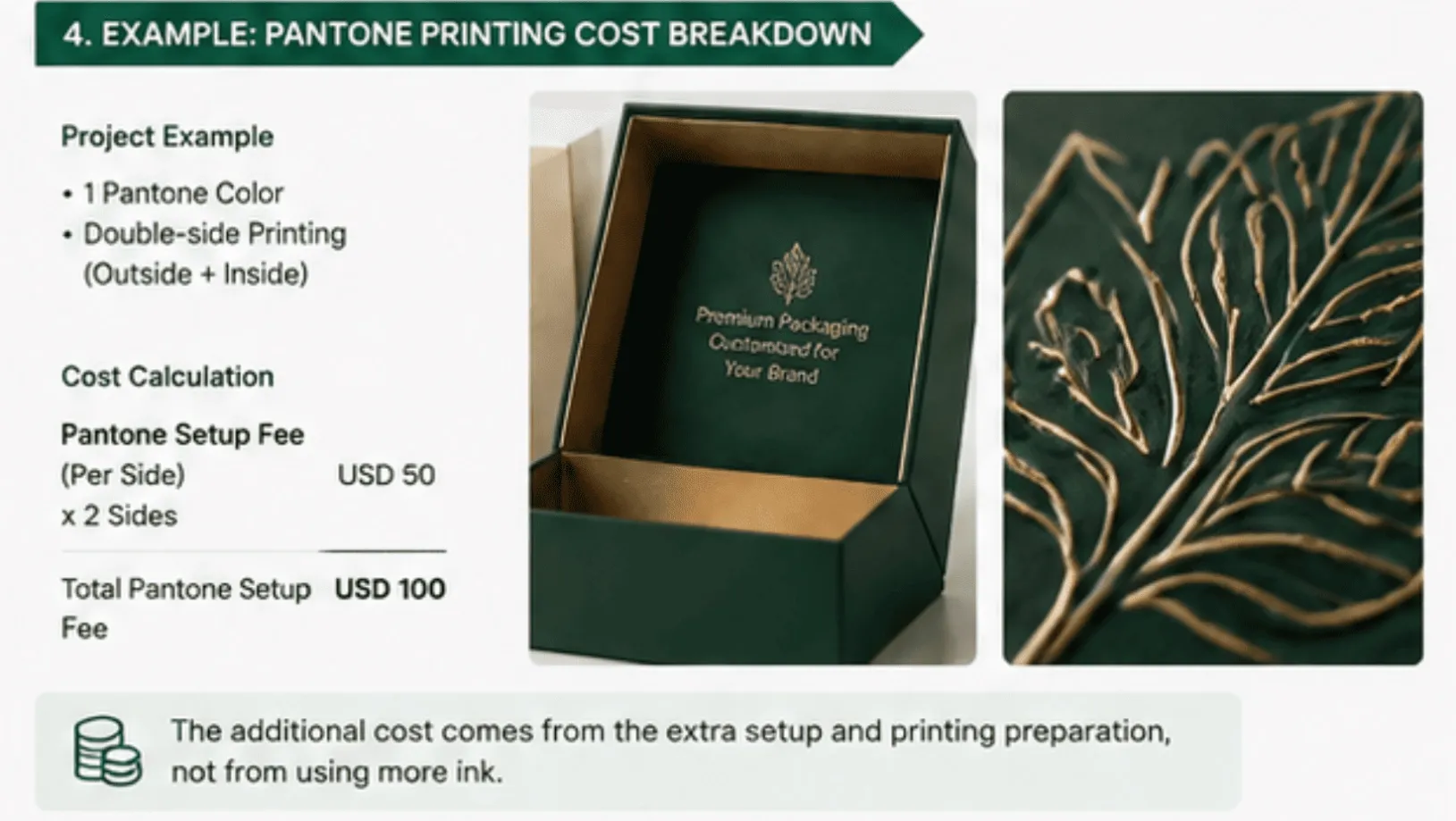
Project requirements: 1 identical Pantone color, printing on both exterior and interior box surfaces
Even with the exact same color code, two separate full setups are mandatory for interior and exterior printing
Calculation: 2 Sides × $50 Standard Setup Fee = $100 Total Pantone Fee
In short, the extra cost is not caused by more colors, but by duplicated setup work for different printing surfaces.
Why the Same Pantone Color Needs Dual Setups for Double-Side Printing
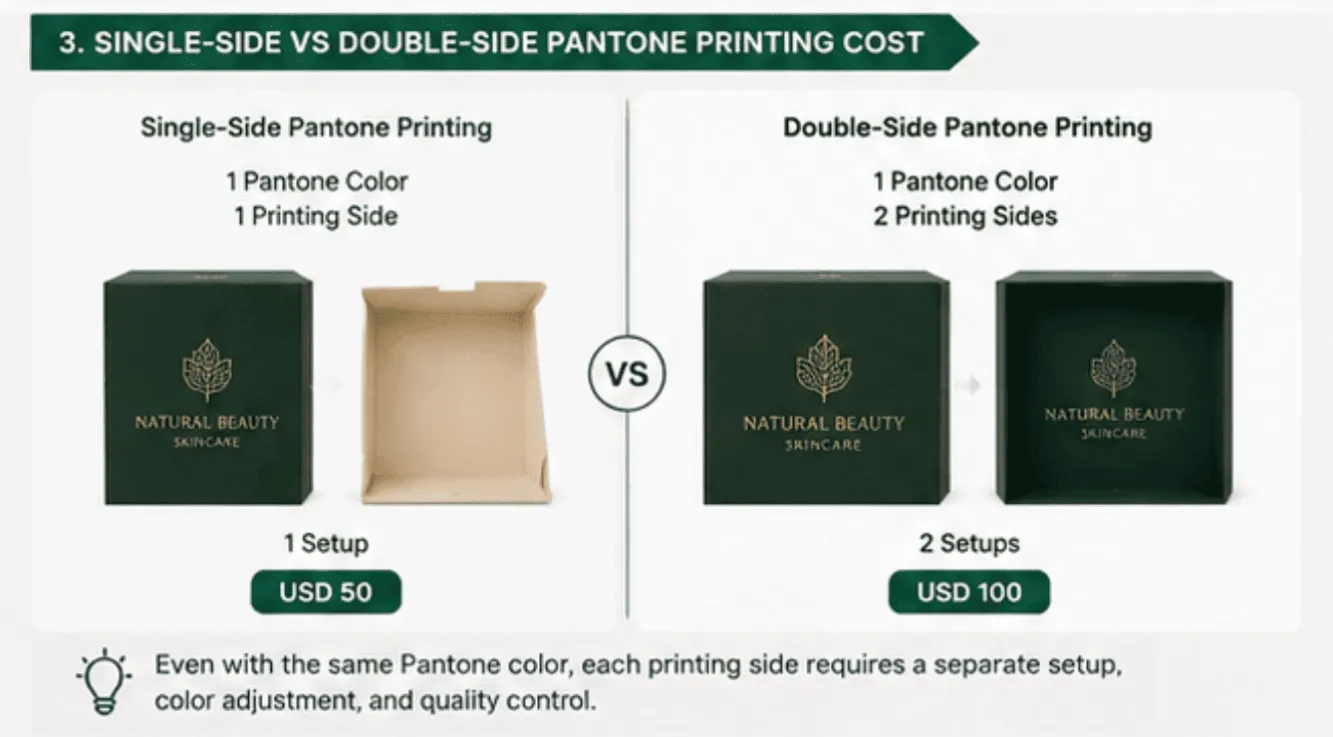
Many buyers question why identical hues require two separate setup processes. The packaging printing industry has strict quality standards that demand independent processing for each side, for four key reasons:
1. Independent Printing Position Alignment
Interior and exterior box surfaces have different printing positioning standards. Printers need to reset machine coordinates, alignment parameters, and registration marks separately to avoid offset or blurry printing.
2. Strict Dual-Side Color Consistency
Production teams must verify that both interior and exterior Pantone shades perfectly match the approved color sample. Separate color calibration ensures no brightness or saturation deviation between two sides.
3. Individual Machine Calibration
Each printing run requires independent ink volume adjustment, pressure testing, and machine parameter tuning to adapt to different printing surfaces and paper tension.
4. Full Double-Side Quality Inspection
QC teams conduct separate sampling and color checks for interior and exterior printing, doubling the quality control workload compared to single-side printing.
Real Client Case: Unexpected Pantone Fee Explanation
To help brands better understand this pricing rule, we share a recent real B2B packaging project case:
A long-term client was surprised by a higher-than-expected Pantone charge for their custom box order. Their design only used one single Pantone color, so they expected minimal extra fees.After artwork review, we confirmed the core reason:
the design required Pantone printing on both interior and exterior surfaces, which needed two independent production setups.
Original quoted cost breakdown:
- Single-side Pantone setup: $50
- Double-side Pantone setup: $100
To maintain our long-term partnership, Cherubox Packaging covered the additional $50 setup cost for this project as a customer benefit. For all future orders, confirming printing sides upfront allows us to provide 100% accurate, transparent quotes with no hidden fees.
6 Practical Tips to Reduce Pantone Printing Extra Costs
Pantone color accuracy is irreplaceable for brand image, but brands can optimize designs to cut unnecessary setup fees without compromising packaging quality.
1. Limit Pantone Color Quantity
Most premium packaging designs only require 1 primary brand Pantone color + 1 supporting accent color. Avoid overusing 4+ Pantone shades, as this will drastically increase setup costs and lose cost advantages over CMYK printing.
2. Confirm Printing Sides Before Requesting Quotes
Provide complete project details to your packaging supplier upfront for accurate pricing:
- Finalized print-ready artwork files
- Exact Pantone color codes (C/U suffix included)
- Clear confirmation of printing sides (interior/exterior/both)
- Detailed finishing and lamination requirements
3. Adopt Hybrid Printing for Complex Designs
Reserve Pantone printing only for core brand logos and solid signature colors. Use cost-effective CMYK printing for product photos, gradients, and complex illustrations to balance brand accuracy and budget.
4. Unify Color Systems for Batch Orders
Keep consistent Pantone codes across all packaging batches to avoid repeated ink mixing and machine reset fees for reorders.
Pair Pantone Printing with Premium Finishes for Luxury Packaging
Pantone spot colors are the perfect base for high-end packaging finishing techniques, helping brands create a standout premium unboxing experience:
- Gold & silver foil stamping
- Debossing and embossing
- Spot UV coating
- Matte lamination & soft-touch coating
This combination is widely applied in cosmetics packaging, cannabis packaging, luxury gift boxes, premium food packaging, and health & wellness product packaging.
How to Avoid Hidden Pantone Printing Costs & Quote Changes
Most unexpected packaging cost increases come from unclear project requirements. Confirm these key details before mass production to lock in your budget:
Printing Requirements
Number of Pantone colors, exact color codes, printing sides (interior/exterior), single/double-sided printing
Material Requirements
Paper stock type, surface coating, texture, and special material treatments
Production Requirements
Pre-production sample approval, color calibration confirmation, final artwork verification
Conclusion: Master Pantone Pricing for Smarter Packaging Budgeting
Pantone color printing is the gold standard for brands pursuing precise, consistent, and professional packaging color presentation. While it requires additional setup fees, the benefits far outweigh the cost for premium branding:
- 100% accurate brand color matching
- Elevated professional packaging appearance
- Unified brand recognition across all sales channels
- Stable batch-to-batch production quality
The key takeaway for all B2B packaging buyers: Pantone printing costs depend on both color quantity and printing sides, not just ink usage.
By understanding this pricing mechanism and standardizing your design requirements, you can create an accurate packaging budget, avoid hidden fees, and cooperate more efficiently with packaging manufacturers.

About Cherubox Packaging
Cherubox Packaging is a professional custom packaging supplier serving brands, wholesalers, and distributors worldwide. We specialize in precise Pantone color matching, hybrid CMYK+Pantone printing, and premium box finishing solutions.
We provide one-stop packaging services from design optimization, cost-effective budget planning, sample confirmation to mass production and global delivery. Whether you need folding cartons, rigid gift boxes, or custom luxury packaging, our team delivers stable quality and transparent pricing with zero hidden fees.
Contact us today info@cherubox.com to get a personalized packaging strategy and free project quotation.