Oct 21, 2026Buying Guides
Spot UV vs Raised Spot UV: Key Differences for Packaging
Compare standard spot UV and raised spot UV for custom packaging. Learn about appearance, texture, cost, artwork requirements, and how to choose the right finish.
Spot UV vs Raised Spot UV: What's the Difference?
Spot UV is a popular finishing technique for custom packaging. It applies a clear, glossy coating to selected areas of a printed surface, such as a brand logo, product name, or decorative pattern. Against a matte background, the contrast can make these elements stand out without changing the overall design.
When comparing packaging finishes, buyers often encounter two options: standard spot UV and raised spot UV. Both create a glossy effect, but they differ in surface texture, visual impact, artwork considerations, and production requirements.
This guide explains the differences between standard spot UV and raised spot UV, when to use each finish, and what to confirm before approving your custom packaging.
What Is Standard Spot UV?
Standard spot UV is a clear coating applied to selected areas of a printed paper or paperboard surface. The coating is cured under ultraviolet light, creating a glossy finish over the chosen design elements.
Unlike an all-over gloss coating, spot UV is applied only to specified areas. This selective application creates contrast between coated and uncoated parts of the design.
Key characteristics of standard spot UV:
Smooth surface: The coating is generally level with the surrounding surface and does not create a pronounced raised effect.
Glossy appearance: Coated areas reflect light and appear shinier than matte or uncoated areas.
Visual contrast: It highlights selected elements without adding substantial surface texture.
Versatile application: It works well for logos, product names, graphic patterns, and selected design details.
Standard spot UV is often used on matte-laminated cosmetic boxes, skincare packaging, folding cartons, and rigid boxes. For example, a glossy logo on a matte forest-green box can create a refined contrast while keeping the rest of the packaging understated.
What Is Raised Spot UV?
Raised spot UV uses a thicker UV coating to create a noticeable surface elevation over selected areas of the printed design. It combines gloss with a tactile effect, allowing customers to see and feel the highlighted elements.
The exact height, texture, and appearance depend on the coating system, equipment, artwork, substrate, and production method. Raised spot UV may also be described by suppliers as 3D UV or dimensional UV, although terminology can vary between providers.
Key characteristics of raised spot UV:
Tactile surface: The coated areas can be felt when touched.
Gloss and dimension: The thicker coating creates a more noticeable visual and physical effect.
Emphasis on key elements: It can make a logo or selected graphic a focal point.
More demanding artwork requirements: Fine lines, small text, and intricate patterns may require adjustments to achieve a clean result.
Raised spot UV can work well on premium gift boxes, fragrance packaging, cosmetic rigid boxes, and presentation packaging where the brand wants to add a tactile detail.
Standard Spot UV vs Raised Spot UV: Key Differences
Feature | Standard Spot UV | Raised Spot UV |
Surface | Generally smooth and level | Noticeably raised and tactile |
Visual effect | Gloss and contrast | Gloss, contrast, and dimension |
Touch | Little noticeable height | Raised areas can be felt |
Best suited for | Logos, patterns, and selected text | Prominent logos and selected graphic elements |
Design detail | Often suitable for moderately detailed artwork | Very fine details may need simplification or testing |
Cost | Generally more economical | Often higher, depending on process and design |
Production considerations | Requires accurate coating registration | Requires coating-height control and accurate registration |
Neither finish is automatically better. The right choice depends on the visual effect you want, the complexity of your artwork, the packaging material, and your budget.
How Do Standard and Raised Spot UV Look and Feel?
Imagine a cream rigid box with a matte-laminated surface and a brand logo on the lid.
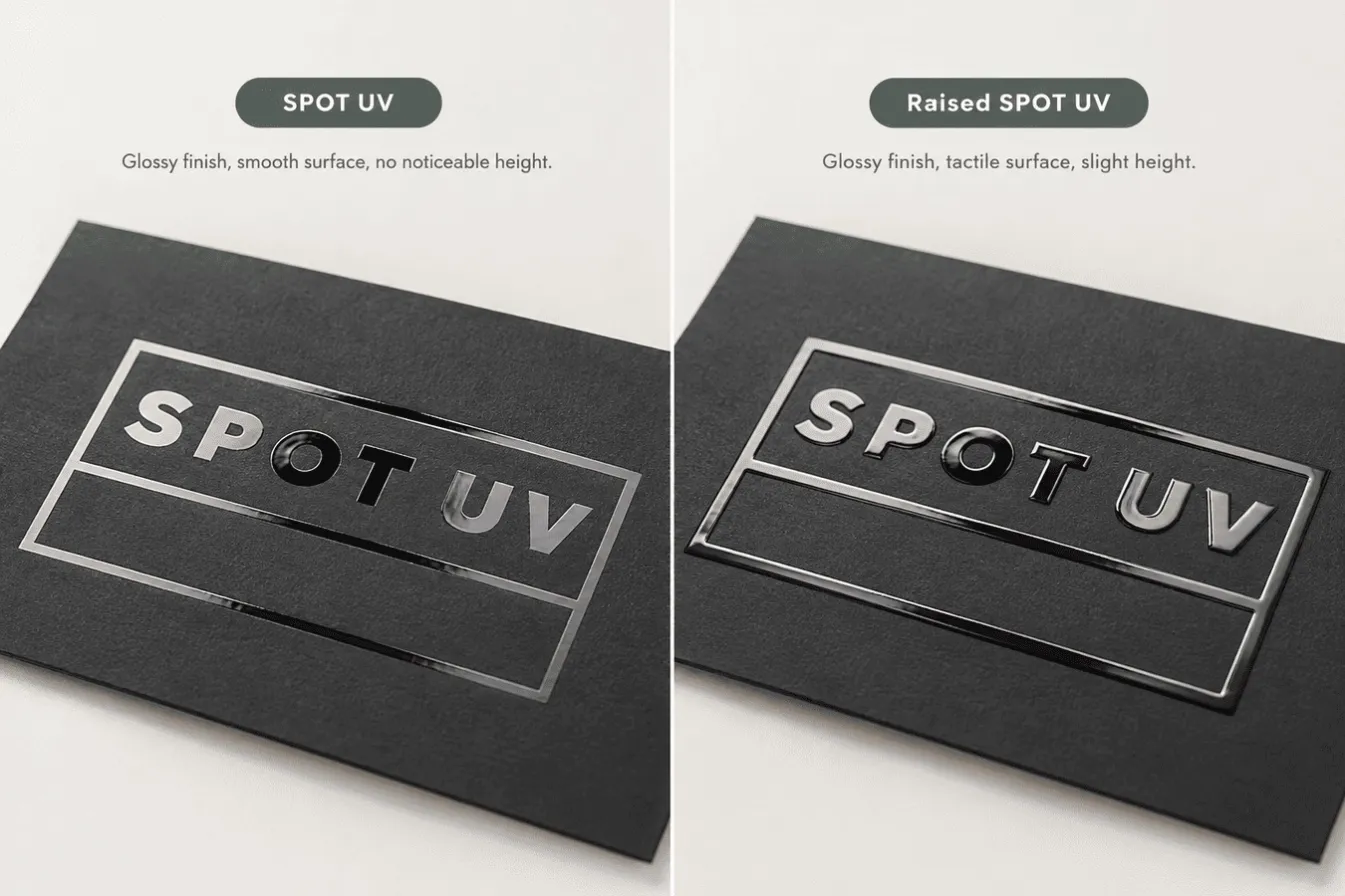
With standard spot UV, the logo appears glossy against the matte background. The contrast becomes more noticeable as the light changes, but the logo generally feels smooth when touched.
With raised spot UV, the logo has both a glossy appearance and a noticeable surface elevation. This added dimension can make the logo more tactile and visually prominent.
For both finishes, the final result depends on the contrast between the coating and the background, the size of the coated area, and the quality of the artwork. A physical sample is the most reliable way to compare the actual gloss and surface feel.
When Should You Choose Standard Spot UV?
Standard spot UV is a practical choice when you want to highlight selected design elements without adding a pronounced tactile effect.
Consider standard spot UV when:
You want a glossy logo or pattern against a matte background.
Your design includes moderate detail or relatively small graphic elements.
You want a premium appearance while keeping finishing costs under control.
Your packaging already includes other finishes and you want to manage production complexity.
You need a versatile finish for cosmetic boxes, skincare packaging, folding cartons, or retail packaging.
For many brands, standard spot UV combined with matte lamination provides a clean, professional result without making the design feel overly elaborate.
When Should You Choose Raised Spot UV?
Raised spot UV is worth considering when touch and dimension are important parts of the packaging experience.
Consider raised spot UV when:
You want customers to feel the logo or selected graphic elements.
Your design has a clear focal point that can support a raised coating.
You are developing premium gift packaging, fragrance boxes, or high-end presentation boxes.
Your artwork can accommodate the coating's production requirements.
Your budget allows for the additional cost that may be associated with the selected process.
Raised spot UV can be particularly effective on matte or soft-touch backgrounds. However, the result should be evaluated on the actual packaging material because coating compatibility and the final appearance can vary.
Spot UV vs Raised Spot UV: Cost and Production Considerations
Standard spot UV is generally the more economical option, while raised spot UV often costs more because of its coating requirements and production controls. The price difference is not fixed; it depends on the supplier's process and the specifications of the job.
Factors that can affect the cost include:
Coated area: The size and coverage of the UV-printed elements can affect material use and processing.
Artwork complexity: Detailed designs may require additional preparation or adjustments.
Order quantity: Setup costs are distributed differently across small and large production runs.
Paper and surface finish: The substrate and any lamination or coating beneath the UV finish can affect compatibility and results.
Production method: Equipment, coating thickness, curing requirements, and registration controls vary by supplier.
Other finishes: Combining UV with foil stamping, embossing, or other effects may increase setup requirements and registration complexity.
For a broader view of packaging costs, read our custom packaging box cost guide. You can also explore our packaging finishes guide for an overview of foil stamping, embossing, spot UV, and lamination.
What Should You Confirm Before Ordering Raised Spot UV?
Before approving a production file, confirm the following details with your packaging supplier:
Coating area: Clearly identify the logo, text, or graphics that will receive the raised coating.
Line thickness and text size: Ask whether fine lines and small lettering are suitable for the proposed process. Some elements may need to be enlarged or simplified.
Registration tolerance: Confirm how accurately the coating can align with the printed artwork and what level of variation is acceptable.
Material compatibility: Check the selected paperboard, lamination, and other finishes for compatibility with the UV coating.
Physical sample approval: Review the gloss, raised height, tactile feel, and alignment before approving mass production.
If your packaging combines raised spot UV with foil stamping, embossing, or several other finishes, ask the supplier to review the full combination rather than evaluating each effect in isolation.
Common Spot UV and Raised Spot UV Mistakes
1. Using raised UV on details that are too fine
Very thin lines and small text may not reproduce as intended with a thicker coating. Have your supplier review the artwork and recommend adjustments or a sample test when necessary.
2. Combining too many finishing effects
Raised UV, foil stamping, embossing, and special laminations can work together, but every added process can increase cost and production complexity. Prioritize the effects that contribute most to the design.
3. Choosing a finish based only on a screen preview
Digital mockups cannot fully communicate coating height, gloss, texture, or the way light reflects from a physical surface. A production-representative sample is more useful for making a final decision.
4. Approving artwork without checking production requirements
Before mass production, confirm the coating separation, registration requirements, material compatibility, and any limitations on small details. For a broader review process, see our guide to checking a custom packaging sample before approval. Check a custom packaging sample before approval
Quick Decision Guide: Which Finish Should You Choose?
Your Priority | Recommended Option |
Glossy contrast at a relatively economical cost | Standard spot UV |
A tactile effect that customers can feel | Raised spot UV |
Artwork with very fine lines or small text | Standard spot UV may be easier to accommodate; confirm with your supplier |
A prominent logo on a premium box | Raised spot UV, if suitable for the artwork |
A simpler finishing process | Standard spot UV is often the more straightforward option |
A design that combines several special finishes | Compare both options and review a physical sample before deciding |
The most suitable finish is the one that supports your brand design, works with your chosen materials, meets production requirements, and fits your budget.
Frequently Asked Questions
Is raised spot UV the same as embossing?
No. Embossing uses a die to create a raised area in the paperboard itself. Raised spot UV creates a raised effect by building up a coating on the surface. The two techniques produce different textures and can sometimes be combined, subject to material and production requirements.
Can spot UV be used on any packaging box?
Spot UV can be used on many printed paper and paperboard packaging surfaces, but suitability depends on the substrate, surface coating, lamination, and production method. A matte background often makes the glossy areas more noticeable. Ask your supplier to confirm compatibility with your specific box material.
Does raised spot UV cost more than standard spot UV?
Raised spot UV often costs more because it may require a thicker coating and additional process controls. The actual price depends on the coated area, artwork complexity, order quantity, materials, and the supplier's production method. Request a quote based on your final specifications.
Which finish is better for luxury packaging?
Both can work well. Raised spot UV adds a tactile dimension, while standard spot UV creates a more subtle glossy contrast. The best choice depends on the brand identity, design, material, and desired customer experience.
Do I need a physical sample before mass production?
A physical sample is strongly recommended, especially when the coating effect is central to the design or combined with other finishes. It lets you assess the gloss, texture, coating height, and registration on the actual packaging material.
Need Help Choosing the Right UV Finish?
Cherubox helps brands and wholesale buyers evaluate custom packaging finishes, including standard spot UV, raised spot UV, foil stamping, embossing, and lamination. Share your box style, artwork, target quantity, and preferred finish, and our team can help assess production feasibility and recommend an option that balances visual impact and cost.
Email: sales@cherubox.com