Oct 21, 2026Buying Guides
7 Ways to Reduce Custom Packaging Costs Without Sacrificing Quality
Discover 7 practical ways to reduce custom packaging costs through smarter box design, material selection, print finishes, order planning, and shipping.
7 Ways to Reduce Custom Packaging Costs Without Sacrificing Quality
Custom packaging helps brands create a recognizable identity, protect their products, and deliver a better customer experience. But costs can climb quickly when a project involves multiple box styles, special finishes, custom inserts, and international shipping. For small and growing brands, the challenge is fitting packaging into the budget without sacrificing protection or presentation.Here's the key idea: cutting packaging costs is not about choosing cheaper materials or removing features — it's about the total landed cost (the full cost of getting the finished packaging to your warehouse, including production, finishing, and shipping), and making smarter choices on structure, specs, order planning, and transport.These seven practical ways help you optimize your custom packaging budget.
- Choose the Most Efficient Box Structure for Your Product
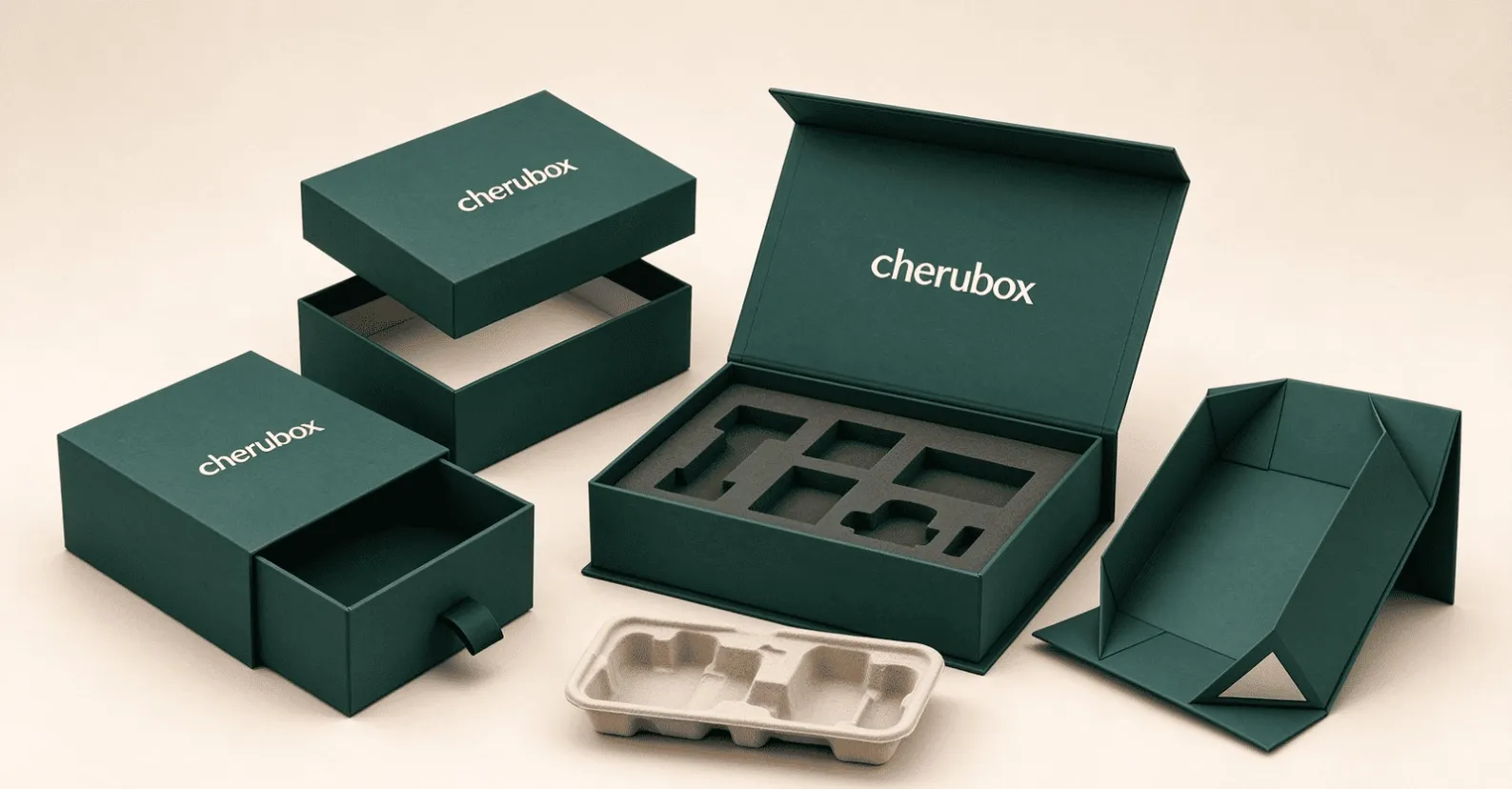
The box style directly affects material usage, manufacturing processes, assembly requirements, and shipping volume. Before picking a structure, consider how the product will be sold, displayed, stored, and transported.
Structure | Best for | Cost characteristics |
Folding cartons | Lightweight retail products | Low material, ships flat, most economical |
Rigid boxes | Gift sets, cosmetics, electronics | Premium look, higher material + shipping volume |
Mailer boxes | E-commerce, presentation + shipping | Mid-cost, combines box + shipper |
Paper sleeves | Extra branding surface | Lowest-cost addition when a full box isn't needed |
These options aren't interchangeable. A folding carton won't match a rigid box's rigidity, and a mailer may need extra protection depending on the product and delivery conditions. The goal is the simplest structure that meets your functional and branding needs. If unsure, ask your supplier to compare suitable options by product dimensions, protection, appearance, and estimated total cost.

- Optimize Box Dimensions Before Finalizing the Design
Dimensions affect material consumption, product fit, insert requirements, and shipping efficiency. An oversized box wastes material, needs more protective filling, and reduces how many units fit per master carton. An undersized box creates loading problems and clearance issues.To optimize:
- Measure the product accurately — include caps, closures, labels, and protruding parts.
- Determine the required clearance for loading and removal.
- Account for the insert and protective components.
- Confirm whether dimensions are inside or outside of the assembled box.
- Review the final structure with a physical sample or prototype.
If ordering several sizes, check whether small structural tweaks improve material efficiency or carton utilization without hurting usability. The best savings come from removing unnecessary space — not the space that protects the product. See our guide on How to Choose the Right Box Size for Your Product.
- Select Materials Based on Performance, Not Just Price
Board type and thickness affect appearance, stiffness, folding, and structural performance. The cheapest board may cut unit price but create hidden costs if the box deforms, closes poorly, or fails in transit. Heavier board than needed wastes material.Evaluate: product weight and fragility, box dimensions and structure, stiffness and stacking needs, print and finish requirements, and storage/transport conditions. A small retail carton needs a different board from a large heavy-product box; a rigid box and a folding carton are judged differently by construction.Ask your supplier to recommend options and explain the performance vs. cost trade-offs, and compare samples with alternative materials before committing.
- Use Special Printing Finishes Strategically
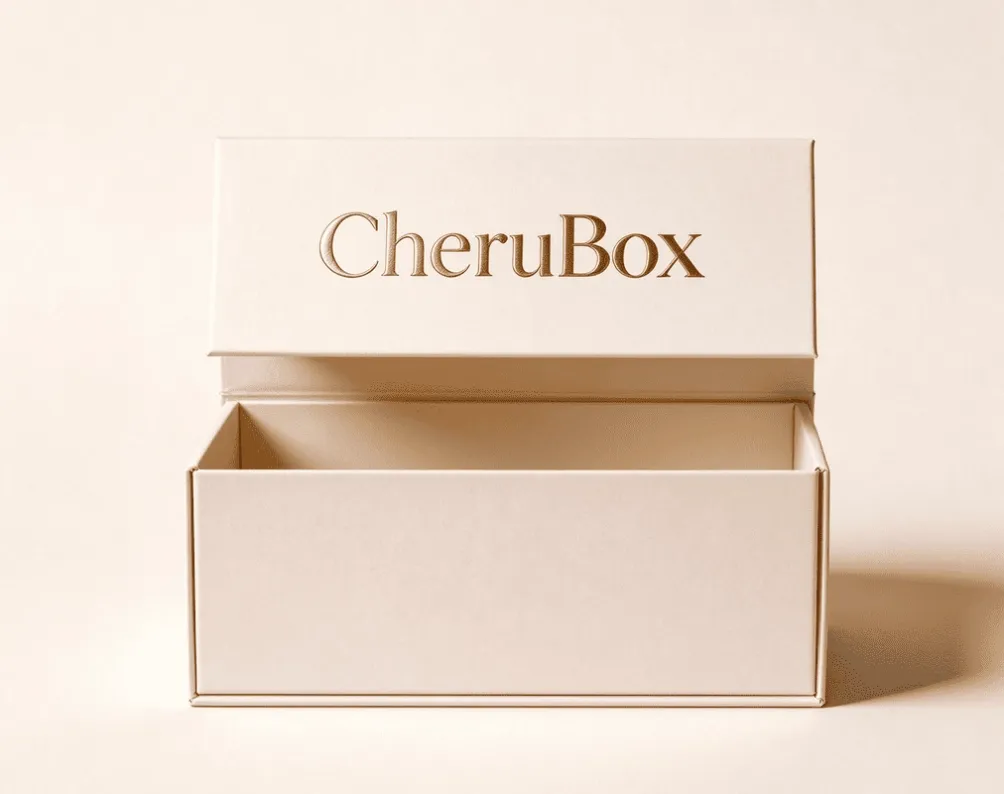
Finishes like foil stamping, embossing, spot UV, and specialty lamination add cost per process. You don't have to remove them — apply them where they deliver the most visual impact:
- Foil the logo or a single design element, not large areas.
- Use spot UV selectively to highlight key graphics.
- Avoid stacking finishes when one or two achieve the effect.
- Confirm the finish suits the substrate and artwork.
- Check the added cost of interior or multi-panel finishes.
A premium cosmetic box can look refined with a strong palette, matte lamination, and one well-placed foil logo — extra effects often cost more than they add. Ask which finishes matter and which can be simplified. See our Packaging Finishes guide for a full comparison.
- Plan Order Quantities Around Realistic Demand
Quantity affects unit price because setup and tooling are spread across the order — but ordering more doesn't automatically lower total cost. Oversized orders tie up cash, need storage, and risk obsolescence if artwork, dimensions, or branding change.Consider: expected sales volume, inventory turnover, shelf life, likely artwork/regulatory changes, storage capacity, and the supplier's quantity pricing. Request quotes at several realistic volumes and compare unit price against total commitment:
Quantity | Unit price (example) | Total commitment (example) |
1,000 | Higher | Lower cash outlay, lower inventory risk |
3,000 | Mid | Balanced |
5,000 | Lower | More cash + storage, higher obsolescence risk |
For a new product, a smaller first order is often worth the higher unit price. For an established product with stable demand, a larger order wins. The right quantity balances unit cost, cash flow, storage, and inventory risk.
- Design Packaging With International Shipping in Mind
For overseas buyers, transport can be a major share of total cost. Dimensions, carton arrangement, and shipping method all affect the final number. Practical steps:
- Optimize individual box dimensions where possible.
- Arrange products efficiently inside the master carton.
- Confirm outer carton dimensions and gross weight before shipping.
- Evaluate whether packaging ships flat or needs pre-assembly.
- Compare air, sea, and other freight options against the deadline.
Flat-packed folding cartons save space; assembled rigid boxes take more volume. Don't shrink protective materials just to shrink the carton — a small freight saving isn't worth product damage. Separate the cost of producing the packaging from the cost of transporting it, and have both evaluated. See our guide on Prevent Packaging Damage During International Shipping.
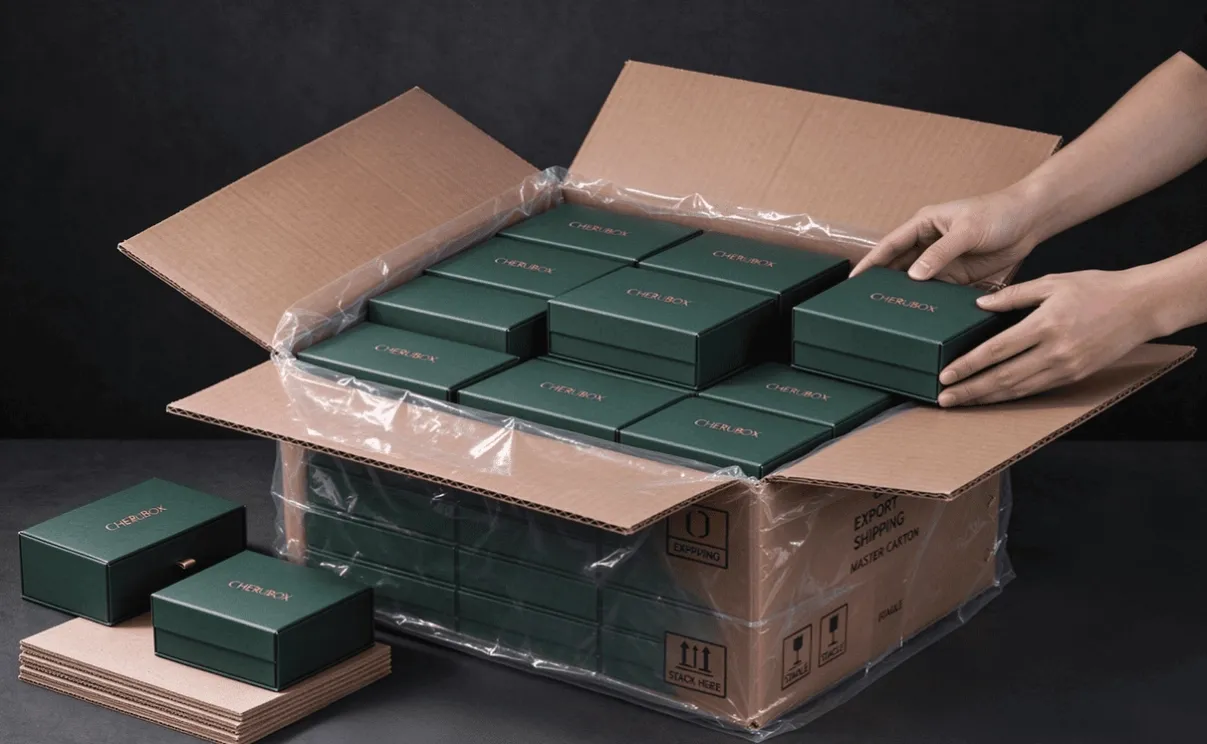
Real-World Example: How an Incorrect Carton Size Affected Shipping Costs
In one international shipment, the freight was estimated on an incorrect outer carton size. The actual production carton measured 383 × 260 × 190 mm, differing from the dimensions used in the estimate — and the corrected freight cost came in USD 2,029 higher than planned. A seemingly small planning error changed the whole budget.The lesson wasn't to find a cheaper carrier. Outer carton dimensions drive how products pack and how freight is calculated; if quote dimensions don't match the real shipment, the estimate is unreliable. Confirm the packing arrangement, carton dimensions, and shipping assumptions before finalizing the freight budget — and review packing alongside the packaging design instead of treating logistics as a last-minute afterthought.
- Work With a Supplier Who Can Optimize the Complete Project
Cost optimization cuts across areas — a smaller box changes inserts, a cheaper board needs a revised structure, a simplified finish preserves the design. A capable supplier helps you weigh these trade-offs instead of just quoting your specs.Share: product dimensions and weight, target quantity, preferred style, required materials/finishes, protection and compliance needs, and shipping destination + deadline. Request an itemized quotation — understanding the cost drivers makes it easy to see which changes are worthwhile. A good cost-saving proposal says what changes, how much it saves, and whether it affects appearance, protection, assembly, or delivery.
How to Build a Cost-Effective Custom Packaging Solution
Reducing costs isn't about making every component cheaper — it's about choosing the right combination of structure, material, printing, quantity, and shipping. Review the whole project, not one unit-price figure. A slightly higher unit price can still lower total cost if it improves shipping, cuts damage, or avoids assembly; a low quote isn't good value if it excludes essentials. Identify priorities, compare equivalent specs, and work with a supplier who explains the cost and performance implications of each option. See also our companion guides on the 8 Questions to Ask a Custom Packaging Supplier and the 7 Things to Check on a Packaging Dieline.
Frequently Asked Questions
How can I reduce custom packaging costs without sacrificing quality?
Optimize the box structure and dimensions, choose materials by performance, use printing finishes strategically, plan order quantities around demand, design for shipping efficiency, and work with a supplier who evaluates the whole project rather than just quoting specs.
How much does custom packaging cost?
It depends on structure, material, quantity, finishing, inserts, and shipping. Compare total landed cost rather than unit price alone, and request itemized quotes at several quantities. See our custom box price guide for indicative ranges.
Does ordering more packaging always lower the cost?
Not necessarily. Volume can reduce unit price, but it ties up cash, needs storage, and raises obsolescence risk. The right quantity balances unit cost, cash flow, and inventory risk.
Which packaging structure is most cost-effective?
Folding cartons are usually the most economical for lightweight retail products; rigid boxes cost more but offer premium presentation. Choose the simplest structure that meets your protection and branding needs.
Do special finishes always add cost?
Yes, each finish is a separate process. Apply them selectively — foil a logo rather than large areas — to get the visual impact without paying for effects that don't add proportional value.
Why does box size affect shipping cost?
Outer carton dimensions and gross weight determine how freight is calculated. A dimensional error in planning can change the shipping estimate significantly, so confirm carton size and packing arrangement before finalizing a freight budget.
Looking to Optimize Your Custom Packaging Budget?
Cherubox helps brands and wholesale buyers develop custom paper packaging with consideration for structure, materials, printing, finishing, inserts, and international shipping. Backed by a US + China design team and low MOQs, our team reviews cost-saving opportunities while keeping product protection and brand presentation in mind.Share your product dimensions, quantity, and shipping destination. Request a Custom Packaging Quote → Email: sales@cherubox.com