Buying Guides
Magnetic Closure vs Ribbon Closure: Which Rigid Box Closure Survives Repeated Opening Better?
Compare magnetic and ribbon closures on a rigid box: how each one works, what wears out with repeated opening, and what to check on a sample before you choose.
Introduction
If your rigid box will be opened more than once — a jewellery box the customer keeps, a gift box that becomes a storage box, a subscription box that is opened every month — the closure is not a decoration. It is the part that gets used every time.
A magnetic closure and a ribbon closure fail in different ways. A magnetic closure has concealed magnets and nothing to untie: you lift the flap and it closes itself. A ribbon closure has to be untied and tied again on every opening, and how it looks afterwards depends on the person tying it.
So which one survives repeated opening better? For a box that will be opened again and again, the magnetic closure is the safer default: there is nothing to re-tie, nothing to crease, and Cherubox describes its magnetic closure boxes as a secure, reusable closure. But that answer only holds if the magnets are positioned correctly and the flap sits flat after assembly — a magnetic flap that does not align will feel weak from the first opening, not the hundredth.
After reading this article, you will know how each closure works, where each one wears, and what to test on a sample before you choose.
Why This Choice Matters
A rigid box is often kept after the product is taken out. Jewellery, watches, cosmetics gift sets, and corporate gifts are all products where the box itself is part of the value. If the closure stops working well, the box stops being reused, and the premium impression is lost with it.
The closure is also the first thing the customer touches. A magnetic flap that snaps shut cleanly feels precise. A ribbon that has to be untied, then re-tied into a neat bow, feels ceremonial — but only if the person opening the box is willing to do that work, and able to tie the bow neatly again.
This matters most when the box will be opened repeatedly. For a one-time gift box that is opened once and put away, either closure can work. For a keepsake box, a storage box, or a box that will be opened and closed many times, the closure has to survive that use. Choose the closure for how the box will actually be used, not only for how it looks in a photograph.
Key Factors to Compare
How Each Closure Works
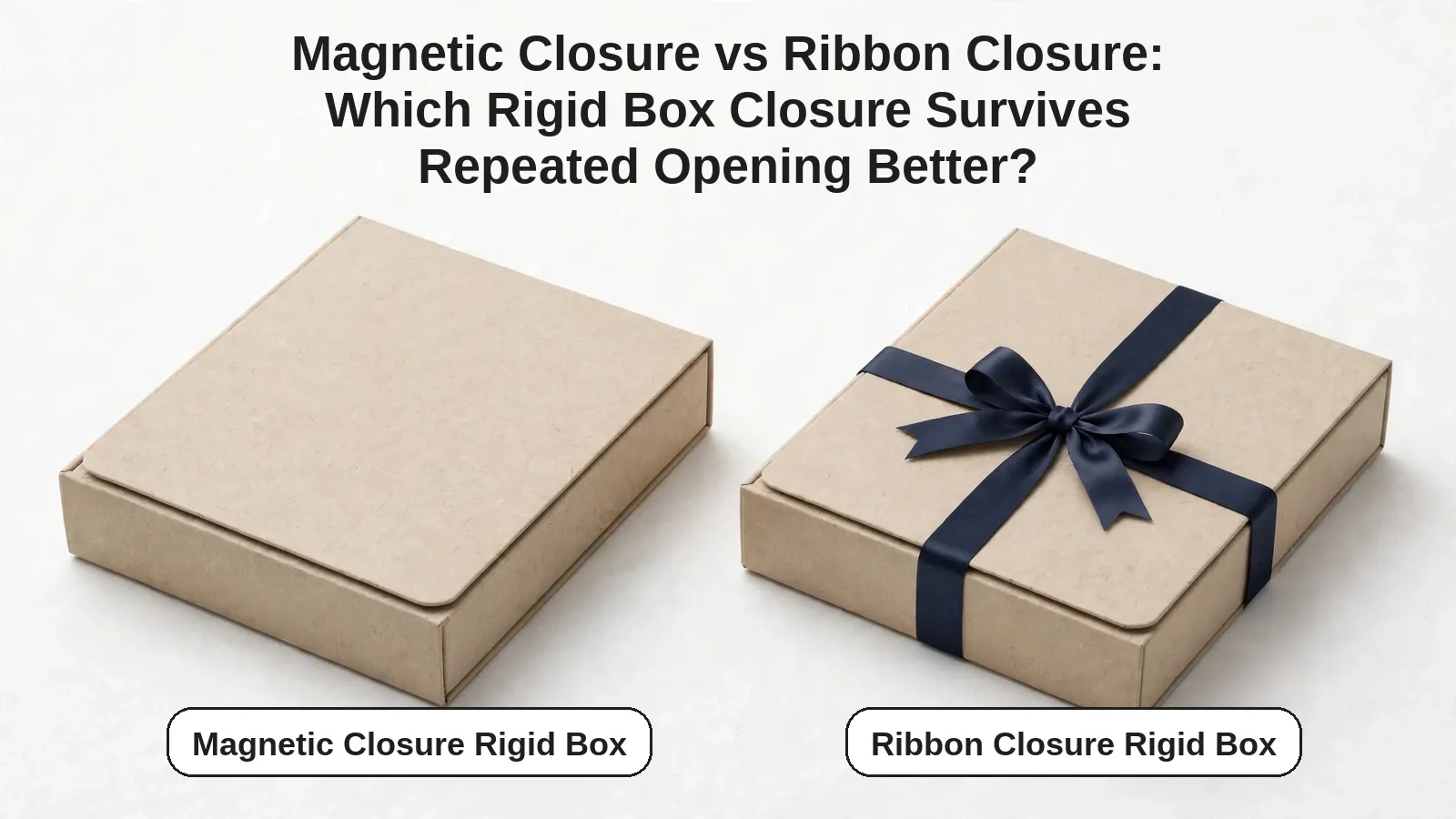
A magnetic closure uses concealed magnets set into the box. On a Custom Magnetic Closure Box, the magnets are hidden inside the paperboard, so nothing is visible from the outside. The flap is lifted to open the box and closes when the magnets meet. Cherubox lists this as a secure magnetic closure with a convenient opening and closing experience, and describes the boxes as suitable for storage and repeated use.
The same concealed-magnet construction can also be used on a collapsible box. On Custom Collapsible Rigid Boxes, the closure options are a magnetic flap, a tuck-in closure, or a custom design, and certain collapsible structures can incorporate concealed magnets for a convenient closure.
A ribbon closure works differently: a ribbon is wrapped around the box and tied, usually in a bow, to hold it shut. Opening the box means untying the ribbon; closing it means wrapping and tying it again. The ribbon is both the closure and the decoration.
One clarification is worth making. A ribbon pull on a drawer box is not the same thing as a ribbon closure. Cherubox lists ribbon pulls as an opening detail for drawer-style boxes — a small ribbon you pull to slide the tray out. A ribbon pull does not hold a box shut. A ribbon closure does. When you discuss a ribbon with a supplier, say which one you mean.
What Wears Out With Repeated Opening
The two closures wear in different places, so they should be tested differently.
With a magnetic closure, there is no knot to undo and no ribbon to crease. The things to check are fit and alignment. For magnetic collapsible boxes, Cherubox's own product page says magnet positioning and closure alignment should be reviewed to ensure proper functionality after assembly. A magnet that is well placed on a flat panel can sit differently once the box is folded and assembled, so the closure should be checked on an assembled sample, not only on a flat sheet. The same logic applies to any magnetic box: if the flap does not sit flat, or the lid and base do not meet evenly, the closure will feel weak — and that is a fit and alignment issue to fix before bulk production, not something that appears only after long use.
With a ribbon closure, the ribbon itself is handled on every opening. It is untied, pulled, re-wrapped, and tied again. That means the wear points are the bow and knot, the ribbon edges, and the places where the ribbon rubs against the box edge. A ribbon that is re-tied many times will not look the same as a ribbon tied once in the factory. Whether that matters depends on the use: for a gift that is opened once, it does not matter at all; for a box that is opened weekly, it is the main thing to think about.
Neither closure comes with a published opening-cycle number on the Cherubox product pages, so do not accept — or write — a claim like "survives 1,000 openings" without test data. The honest way to compare them is to test both on a sample: open and close each one repeatedly, and look at what changes.
Opening and Closing Experience
A magnetic closure is faster and simpler to use. Lift the flap, take the product out, close the flap. It can be done with one hand, and it closes the same way every time. That is why magnetic boxes are widely used for cosmetics and skincare gift sets, jewellery and accessories, luxury gifts, and premium retail and subscription packaging — all cases where the box is opened more than once.
A ribbon closure is slower and more deliberate. Untying and re-tying takes time and two hands, and the result depends on the person doing it. That is not a flaw when the ceremony is the point: a ribbon makes the opening feel like an occasion, which is why it is often chosen for a single special gift. It becomes a drawback when the box is opened often, or by different people, or in a hurry.
If the customer will open the box many times, ask who will be opening it and how often. If the answer is "the customer, every day," a magnetic closure is the practical choice. If the answer is "once, on a special occasion," the ribbon's ceremony may be worth more than its inconvenience.
Appearance After Repeated Use
A magnetic closure looks the same after repeated use because nothing is visible: the magnets are concealed, and the outside of the box shows only the paper, print, and finish. What changes with use is not the closure's appearance but the box's fit — a flap that no longer sits flat will show a gap. That is why the sample check for a magnetic box is about alignment: does the flap sit flat and close cleanly, on the first opening and on the twentieth?
A ribbon closure's appearance changes with use because the ribbon is the appearance. A freshly tied bow looks neat; a bow re-tied by hand may not. The ribbon can also pick up creases where it is folded around the box edge, and its ends can fray where they are handled. None of this affects whether the box stays shut, but it does affect whether the box still looks premium after repeated use.
If the box is meant to be kept and displayed, the magnetic closure keeps its appearance with less effort. If the box is meant to be given once, the ribbon's appearance on that one occasion is what counts.
Which Closure Fits Which Use
Use the product's real use to decide, not the photograph:
- Keepsake and storage boxes (jewellery, watches, items the customer keeps in the box): magnetic closure. It is opened and closed repeatedly, and Cherubox describes its magnetic boxes as suitable for storage and repeated use.
- Subscription and retail boxes (opened regularly, sometimes in a hurry): magnetic closure. It is faster, needs no re-tying, and closes the same way every time.
- One-time special gifts (opened once, for ceremony): ribbon closure can be the better choice, because the untying is part of the gift experience.
- Gift sets that travel (sent by courier, opened on arrival): ask how the closure will be secured for shipping. A magnetic flap that is closed when it leaves the factory stays closed; a ribbon that is tied when it leaves the factory depends on the knot holding through handling. This is a question to ask the supplier, not something to assume.
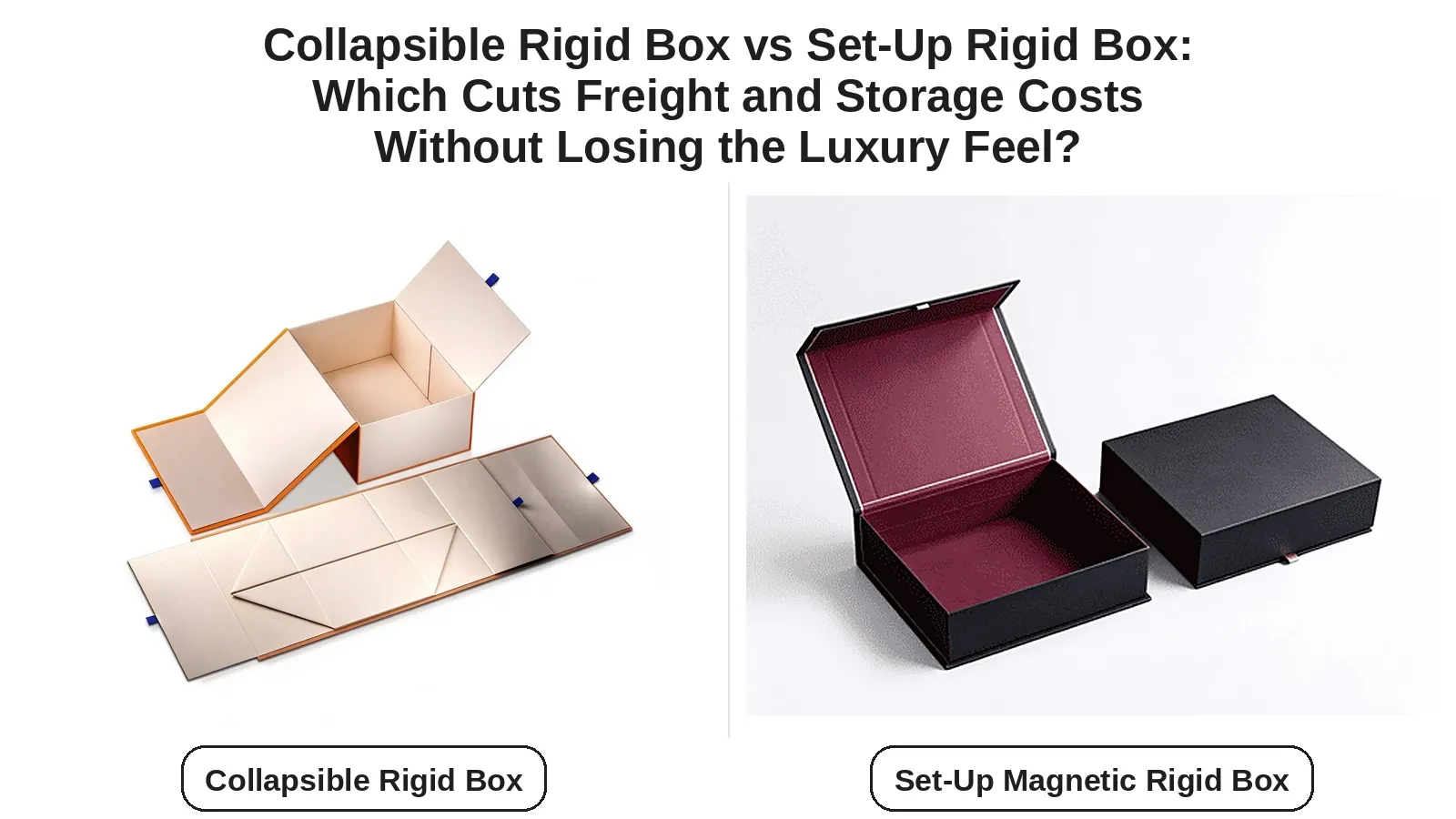
For the freight and storage side of the same decision — flat-pack versus set-up boxes — see Collapsible Rigid Box vs Set-Up Rigid Box: Which Cuts Freight and Storage Costs Without Losing the Luxury Feel?.
Recommended Solution
Factor | Magnetic Closure | Ribbon Closure |
|---|---|---|
How it works | Concealed magnets in the paperboard; flap lifts to open and closes when the magnets meet | Ribbon wrapped around the box and tied, usually in a bow; must be untied to open and re-tied to close |
Repeated opening | No re-tying; suitable for storage and repeated use, as described on the Cherubox magnetic closure product page | Handled on every opening; bow, knot, edges, and rub points are the wear points; appearance after re-tying depends on the person tying it |
What to check on a sample | Magnet positioning and closure alignment; flap sits flat and closes cleanly after repeated opening | Ribbon re-ties neatly after repeated opening; no fraying or creasing that spoils the look; knot holds through handling |
Speed and ease | Fast, one-handed, same result every time | Slower, two-handed, result varies each time |
Appearance over time | Nothing visible from outside; a gap appears only if fit or alignment is wrong | Ribbon is the appearance; a re-tied bow may look less neat than a factory-tied one |
Best for | Keepsake, storage, subscription, and retail boxes opened again and again | One-time special gifts where the untying ceremony is part of the experience |
Choose a magnetic closure when: the box will be opened and closed repeatedly, the customer will keep the box, or the opening has to be quick and reliable every time. Confirm on a sample that the magnets are positioned correctly, the flap sits flat, and the closure feels the same after repeated opening.
Choose a ribbon closure when: the box is opened once for a special occasion, and the ceremony of untying the ribbon is worth more than the convenience of a magnetic flap. Confirm with the supplier whether a ribbon closure is available for your chosen box structure, and how the ribbon will be secured for shipping.
If you are still unsure: order a sample of each closure on the same box, open and close both repeatedly, and compare what changes. The sample test is the decision — not the photograph, and not a claimed number of openings.
What Information to Send Before Inquiry
Send the same details for both closures, so the comparison is fair:
- How the box will be used: how often it will be opened, by whom, and whether the customer will keep the box. This is the single most important detail for a closure decision.
- Box structure and size: product dimensions and weight, and the inside size the box must hold. Box size is fully customised to product dimensions. Say whether you want a magnetic book-style box, a collapsible box with a magnetic flap, or another structure — the closure options depend on the structure.
- Closure preference, if any: magnetic, ribbon, or no preference. Note: the Cherubox product pages list a concealed magnetic closure as a standard option, and magnetic flap / tuck-in / custom design for collapsible boxes. A ribbon closure is available as a custom design (confirmed 2026-11-13), so ask for the details for your structure at inquiry.
- Shipping plan: how the box will be shipped and whether the closure must hold through courier handling. Ask how a ribbon closure would be secured for shipping if you choose it.
- Printing and finishes: artwork, colours (CMYK and Pantone spot colours are available), and surface finishes (matte or gloss lamination, foil stamping, embossing, debossing, spot UV). For finishes, see Packaging Finishes Guide.
- Inserts: what the insert must hold. Magnetic closure boxes can use paperboard, moulded pulp, EVA foam, or other foam inserts. For guidance, see Packaging Inserts: A Complete Guide.
- Sample test plan: ask for a sample to evaluate box structure, printing, materials, and finishes — and say you will test the closure by opening and closing it repeatedly. For a full checklist on what to check, see How to Check a Custom Packaging Sample Before Production. For the questions to ask a supplier before you decide, see Questions to Ask a Custom Packaging Supplier. For what a quotation should list, see How Much Do Custom Packaging Boxes Cost? and How to Reduce Custom Packaging Costs.
Share these details, and the supplier can tell you which closure fits, what to sample, and what to check before bulk production.
FAQ
Does a magnetic closure weaken over time?
Cherubox describes its magnetic closure boxes as a secure, reusable closure, suitable for storage and repeated use. If a magnetic lid feels weak, the first things to check are magnet positioning and closure alignment, and the fit between the lid and the base — not the magnet itself. No opening-cycle test number is published on the product pages, so the way to be sure is to test it on a sample: open and close the box repeatedly and check that the flap still sits flat and closes cleanly.
Will a ribbon closure come undone in shipping?
A ribbon closure holds only as well as its knot, and the knot is tied by hand. Ask the supplier how the ribbon will be secured for shipping — whether it is tied, taped, or packed separately for the customer to tie. Do not assume a decorative bow will survive courier handling the same way a magnetic flap does.
Can a magnetic box also have a ribbon?
A ribbon can be decorative while the magnet does the holding, but a decorative ribbon and a ribbon closure are two different things. That combination is available as a custom design (confirmed 2026-11-13); ask for the details for your box structure at inquiry, with the structure and size already specified.
How do I test a closure before bulk production?
Ask for a sample and test it the way the customer will use it. For a magnetic closure: open and close it repeatedly, check the flap sits flat, and check the closure feels the same on the twentieth opening as on the first. For a ribbon closure: untie and re-tie it repeatedly, and check whether the bow still looks neat and the ribbon edges still look clean. Check the closure with the product and the insert inside, because a full box closes differently from an empty one.
Conclusion
A magnetic closure survives repeated opening better, because there is nothing to untie, re-tie, or crease — but only when the magnets are positioned correctly and the flap sits flat. A ribbon closure wins on ceremony, because untying the ribbon is part of the gift — but it asks the customer to do work on every opening, and its appearance after repeated use depends on how neatly it is re-tied.
So the decision is about use, not about looks alone. A box that will be opened again and again should close with a magnet. A box that will be opened once, for a special occasion, can close with a ribbon.
The next step is to say how often the box will be opened, ask for a sample of the closure you prefer, and test it by opening and closing it repeatedly before bulk production.
To compare closures for your product, view Custom Magnetic Closure Boxes and Custom Collapsible Rigid Boxes, or contact Cherubox for a free quote: sales@cherubox.com / +86 131 6475 7116.