Oct 16, 2026Buying Guides
How to Choose the Right Box Size for Your Product
Learn how to choose the right custom box size — measure accurately, allow the right clearance, and balance product fit with protection, cost and shipping.
How to Choose the Right Box Size for Your Product
Box size is one of the first — and most consequential — decisions in a custom packaging project. Get it right and your product is protected, presented well, and shipped economically. Get it wrong and you face loose or cramped packaging, extra shipping volume, damaged goods, or a redesign after thousands of boxes have been made.Choosing the right size is not guesswork. It starts with measuring accurately, then adding the right clearance for loading, inserts, and protection — while keeping the box as compact as possible to control cost.
Why Box Size Matters
The size of your box affects almost every part of the packaging decision:
- Product fit — a box that is too tight is hard to load and remove; too loose lets the product shift.
- Protection — correct clearance leaves room for cushioning without allowing damaging movement.
- Cost — bigger boxes use more material and add shipping volume. Oversized boxes waste both.
- Customer experience — a box that feels right in the hand and opens cleanly reinforces your brand.
In short, the goal is the smallest box that fits, protects, and presents well.
Internal vs. External Dimensions
This distinction is essential. An assembled box has two sets of dimensions:
- Internal dimensions — the usable space inside the box. This determines how your product fits.
- External dimensions — the overall footprint. This affects storage, master carton planning, and shipping.
When you specify or compare a box, confirm which measurement you are talking about. A common source of error is quoting the external size when the product actually needs to fit the internal space.
How to Measure Your Product
Accurate measurement is the foundation. Before choosing a box:
- Measure the actual product — including caps, closures, labels, and any protruding parts. Do not rely on nominal or "ideal" product dimensions.
- Measure at the widest and tallest points — a tapered bottle, a box with a hanging tag, or a product with a seam can be bigger than it first appears.
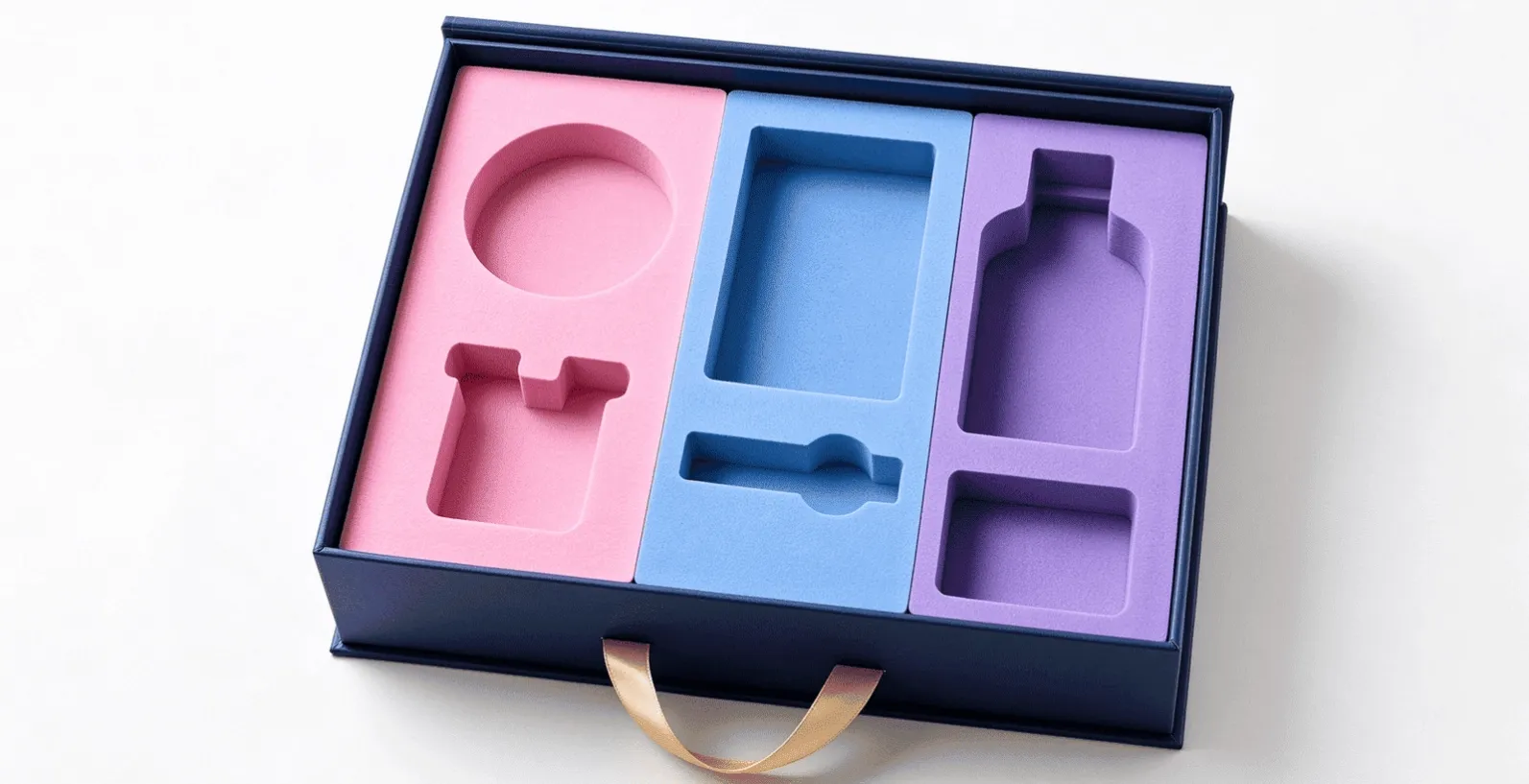
- Account for the insert and protective layers — an insert, foam, or cushioning reduces the usable internal space.
- Decide on clearance — add a small allowance so the product can be loaded and removed easily without excessive movement. As a practical starting guide, a few millimeters of clearance per side (for example roughly 2–5 mm) is common for many retail products; more is needed where cushioning or heavier protection is required. Exact values depend on the product, material, and intended protection — confirm with your supplier.
- Choose internal or external — decide which dimension set the specification refers to, and keep it consistent across your team and the supplier.
Test Before You Commit
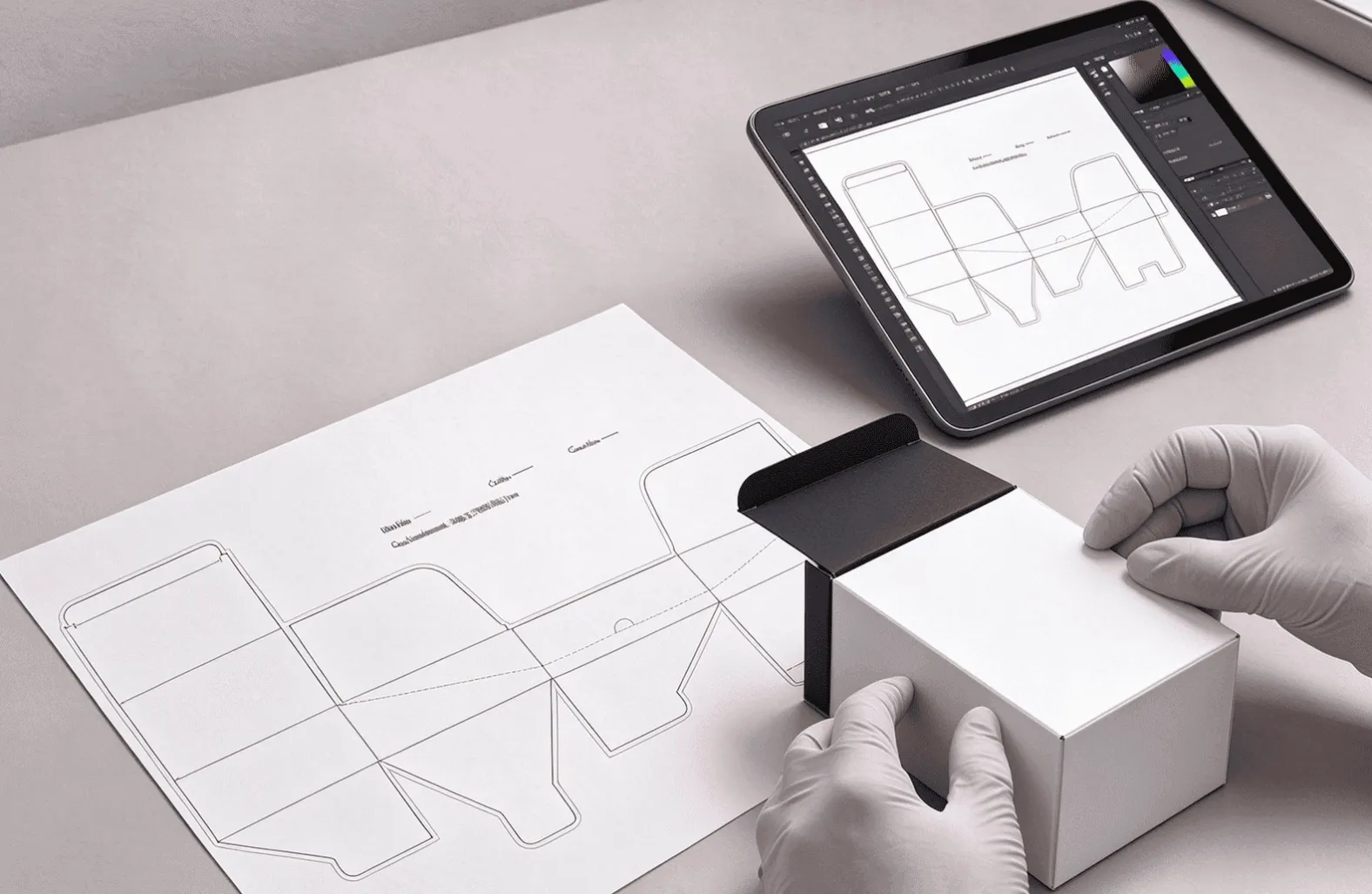
A drawing does not prove fit. Validate with a physical sample or prototype and place the actual product inside. Check loading, removal, closure, and whether the product moves or is too tight. For more, see our guide on 7 Things to Check Before Approving Your Custom Packaging Sample.
Box Size, Cost, and Shipping
Size has a direct effect on your budget:
- Material — larger boxes use more paperboard or corrugated board.
- Shipping volume — boxes that are too large inflate master carton size and freight. Optimizing dimensions is one of the cheapest ways to cut packaging cost. See 7 Ways to Reduce Custom Packaging Costs.
- Insert and protection — the right clearance avoids both a loose product and an over-engineered, costly cushion.
Common Box-Sizing Mistakes
- Measuring the "ideal" product, not the real one — caps, labels, and seams get forgotten.
- Confusing internal and external dimensions — the product must fit the internal space.
- Zero or excessive clearance — too tight to load, or too loose and fragile.
- Forgetting the insert — a correct-looking box may no longer fit once an insert is added.
- Designing to a standard box instead of the product — a "standard" size rarely fits a custom product well.
Checklist for Choosing Your Box Size
Step | What to do |
1. Measure the product | Include caps, closures, labels, widest/tallest points |
2. Add clearance | Allow easy loading/removal; account for cushioning |
3. Include the insert | Inserts reduce usable internal space |
4. Confirm internal vs external | State which dimension set you mean |
5. Validate with a sample | Place the actual product inside before approving |
Not sure what size fits your product and budget? Send us your product dimensions and quantity, and our team — backed by a US + China design team and low MOQs — will recommend a box size that balances fit, protection, and cost. Get a Custom Packaging Quote →
Frequently Asked Questions
How much clearance should I leave around a product in a box?
Clearance depends on the product, its fragility, and the protection needed. As a practical starting point, a few millimeters per side (roughly 2–5 mm) is common for many retail products; heavier or fragile products need more room for cushioning. Confirm the exact allowance with your supplier.
Do box dimensions refer to internal or external size?
It can be either — the important thing is to state which one you mean. Internal dimensions determine how the product fits; external dimensions affect storage and shipping.
Why does box size affect cost?
Larger boxes use more material and add shipping volume. Oversized boxes waste material and freight; the smallest box that fits, protects, and presents well is usually the most economical.
Should I choose a standard box size?
Standard sizes can be convenient, but they rarely fit a custom product well. Measuring your actual product and sizing the box to it usually gives better fit, protection, and cost efficiency.
Need Help Choosing the Right Box Size?
Cherubox helps brands and wholesale buyers develop custom paper packaging with the right dimensions, structure, inserts, printing, and finishing for their products. Share your product dimensions, weight, and quantity, and we'll recommend a box size and structure that fits your product and your budget.