Oct 26, 2026Buying Guides
7 Key Factors That Make a Good Custom Packaging Insert
What makes a good custom packaging insert? Explore 7 essential design factors, from product fit and protection to material choice, usability, and cost.
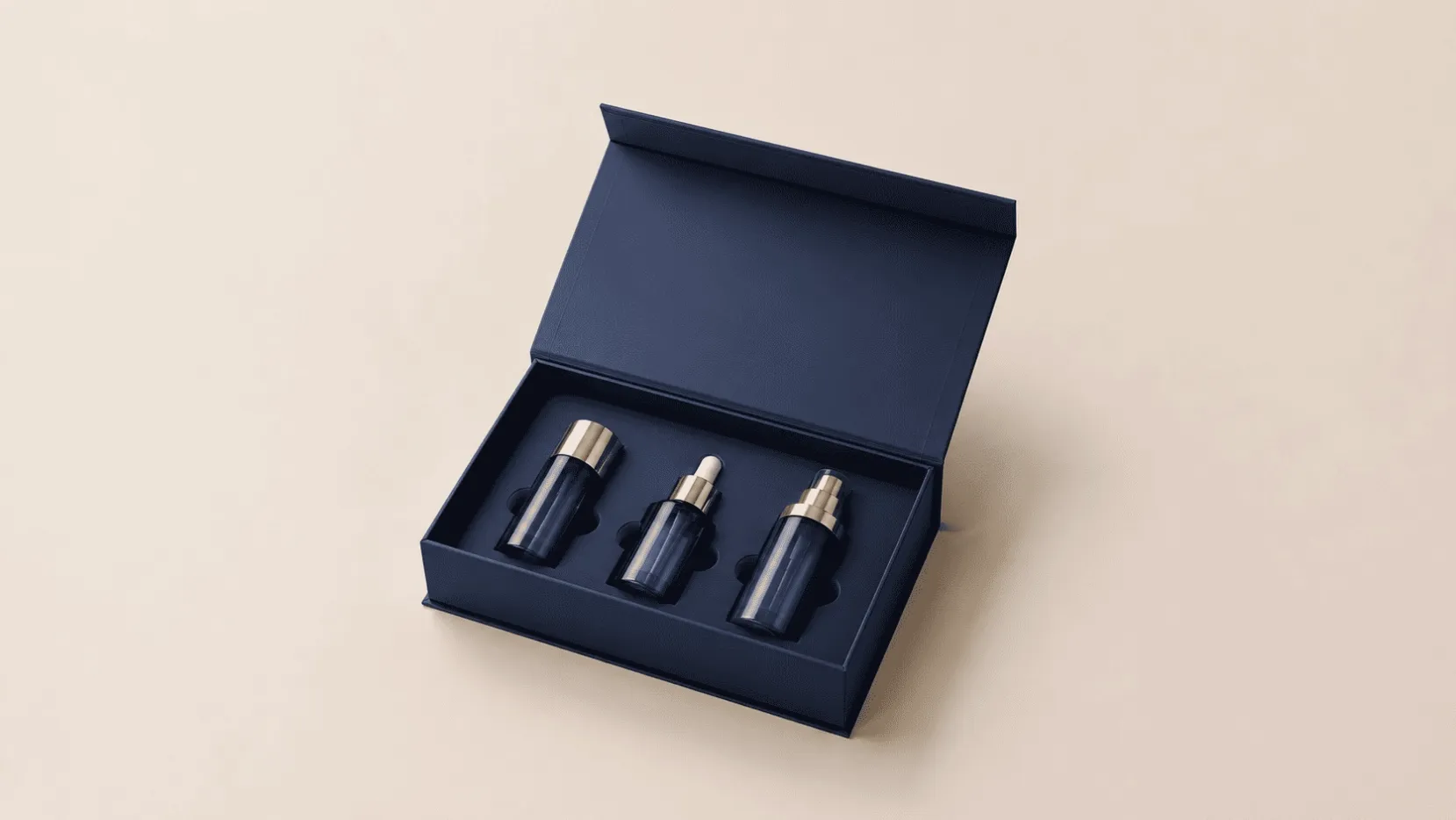
7 Key Factors That Make a Good Custom Packaging Insert
A beautiful box means little if the product inside moves around, gets scratched, or is difficult to remove.
That's why a well-designed packaging insert matters just as much as the outer box.
Whether you're packaging cosmetics, glass jars, candles, electronics, or premium gift sets, the right insert should do more than hold a product in place. It should protect the contents, simplify packing, create a better unboxing experience, and remain practical for bulk production.
But what actually makes a good custom packaging insert?
At Cherubox Packaging, we regularly review packaging projects where small details—such as slot dimensions, material stiffness, and product clearance—can make a significant difference in the finished packaging.
In this guide, we'll explore seven essential factors to evaluate before approving your custom packaging insert for mass production.
What Is a Custom Packaging Insert?
A custom packaging insert is an internal component designed to hold, position, separate, or protect products inside a box.
Depending on the application, it may be made from:
- Paperboard
- Corrugated cardboard
- Molded pulp
- EVA foam
- Other protective foam materials
- PET or other formed plastic trays
Different materials offer different levels of support, cushioning, appearance, and cost.
However, choosing the right material is only one part of designing an effective insert.
The insert must also fit the actual product, work with the outer packaging, and perform reliably during packing, handling, and transportation.
Here are seven factors every packaging buyer should consider.
Secure Product Fit: Keep Products in Position
The primary purpose of many packaging inserts is to keep products securely positioned inside the box.
An insert that is too loose may allow products to move, rotate, or collide during handling.
An insert that is too tight can create other problems, such as scratched labels, damaged surfaces, or difficulty removing the product.
A good insert should provide enough retention to hold the product in place without applying excessive pressure.
What Should You Check?
- Does the product remain stable when the box is moved?
- Can the product rotate or shift inside the insert?
- Are delicate surfaces protected from unnecessary contact?
- Does the insert support the product at appropriate contact points?
- Can the product be removed without excessive force?
For example, a glass cosmetic bottle may require a different holding structure from a lightweight cardboard product.
The goal is not always to create the tightest possible fit.
The goal is controlled retention that suits the product's weight, shape, and handling requirements.
Proper Clearance and Tolerances: Why Small Dimensions Matter
One of the most common packaging insert design challenges is determining the correct clearance between the product and its holding slot.
A product's nominal dimensions do not always represent its actual finished size.
Labels, caps, coatings, manufacturing tolerances, and slightly irregular shapes can affect how the product fits.
Even a small dimensional difference may change the insert's performance.
Real Project Example: Choosing the Right Slot Width
In a custom packaging project we discussed, the product measured approximately:
70 × 70 × 23.7 mm
The packaging concept involved arranging products in two columns and five rows, with two layers inside the package.
The insert and divider structure used 400gsm paperboard.
One important design question was the slot width.
The dimensions under consideration included:
Slot Width | Design Consideration |
|---|---|
70.5 mm | Relatively close fit; potential concern if labels or product tolerances increase the actual width |
71 mm | An intermediate option worth testing |
72 mm | More clearance, but retention and product movement need to be checked |
The customer raised concerns that the original clearance might be insufficient once the product label was applied.
Rather than assuming one dimension was automatically correct, different clearance options were considered for physical sample evaluation.
This is a useful example of why insert design should be based on the actual finished product, not only its nominal dimensions.
The available project information does not establish which slot width was ultimately approved, so these dimensions should be treated as design options rather than a universal recommendation.
How Much Clearance Is Enough?
There is no single clearance value suitable for every insert.
The correct allowance depends on:
- Product dimensions and manufacturing tolerances
- Label or sleeve thickness
- Insert material thickness and stiffness
- Slot geometry and contact points
- Required holding force
- Manual or automated packing requirements
Buying Tip: Always test the insert with the actual finished product, including labels, caps, and other external components.
Adequate Protection: Design for Real Handling Conditions
An insert may hold a product securely on a desk but perform differently during transportation.
Packaging can experience vibration, impacts, stacking pressure, and repeated handling.
A good insert should be designed with the expected distribution environment in mind.
Protection Is More Than a Tight Fit
An insert that holds the product tightly does not necessarily provide sufficient cushioning.
For fragile items, the design may need to absorb or distribute forces rather than transfer them directly to the product.
For example:
- Glass bottles may require stable support and separation between units.
- Ceramic products may need cushioning around vulnerable areas.
- Cosmetic jars may require dividers to prevent contact.
- Electronics may need additional consideration for surface protection and sensitive components.
- Heavy products may require stronger insert materials or reinforced support.
The appropriate design depends on product fragility, weight, box structure, and shipping conditions.
What Should Be Tested?
Before mass production, consider:
- Product movement during normal handling
- Stability when the package is tilted
- Contact between adjacent products
- Pressure on fragile surfaces
- Insert deformation under product weight
- Representative transportation conditions
For higher-risk products, formal package performance testing may also be appropriate.
A well-designed insert should protect the product as part of the complete packaging system—not simply look secure when the box is opened.
Easy Product Insertion and Removal: Don't Overlook Usability
A packaging insert should work for both the packing team and the end customer.
If workers must force products into the insert, packing becomes slower and may increase the risk of damage.
If customers struggle to remove the product, the unboxing experience can become frustrating.
Good insert design balances retention with accessibility.
Practical Design Features
Depending on the product, useful features may include:
Finger Notches
Small cutouts that give customers room to grip and remove the product.
Pull Tabs
Tabs or ribbons that help lift products from deeper cavities.
Accessible Product Orientation
Positioning the product so it can be removed without awkward handling.
Appropriate Slot Depth
Holding the product securely without burying it too deeply inside the tray.
Smooth Contact Edges
Reducing the risk of scratching or damaging labels and delicate finishes.
Why This Matters for B2B Buyers
For large-volume orders, even a small increase in packing time can affect labor efficiency.
An insert that takes several extra seconds to assemble or load may create additional operational costs across thousands of units.
Before approval, ask someone unfamiliar with the design to pack and unpack the product.
If the process is difficult or requires special instructions, the insert may need improvement.
Material Stiffness and Durability: Choose Based on Function
The insert material must provide enough support for the intended product.
For paperboard inserts, stiffness, thickness, folding performance, and structural geometry can influence the result.
A heavier paperboard is not automatically the best choice.
For example, two paperboards with the same GSM may have different stiffness or thickness depending on their construction.
What Should Buyers Evaluate?
Load-Bearing Ability
Can the insert support the product without excessive bending or deformation?
Shape Retention
Will the insert maintain its intended shape during assembly and handling?
Folding Performance
Can paperboard components be folded without unwanted cracking or damage?
Slot and Tab Strength
Are retaining features strong enough for repeated packing and normal handling?
Material Compatibility
Will the insert scratch, stain, or otherwise affect the product surface?
For multi-product packaging, divider height and panel stability also deserve attention.
A paperboard divider may need additional structural support when separating heavier items or supporting multiple layers.
The material should be selected based on the required function—not GSM alone.
Presentation and Unboxing Experience: Make the Product Look Intentional
A packaging insert is often one of the first things customers notice when opening a box.
A poorly fitted tray can make premium packaging feel unfinished.
A well-designed insert, on the other hand, helps create a clean and organized presentation.
What Makes an Insert Visually Effective?
Balanced Product Positioning
Products should appear deliberately arranged rather than randomly placed.
Consistent Spacing
Even spacing can make multi-product sets look more professional.
Appropriate Product Visibility
The insert should display the important parts of the product without covering too much of its design.
Material and Color Coordination
The insert should complement the outer box and overall brand presentation.
Clean Structural Details
Visible tabs, slots, and folded edges should appear neat and intentional.
For luxury cosmetics, jewelry, or gift sets, the presentation may be just as important as the protective function.
However, visual appeal should never compromise product security.
The best insert designs combine attractive presentation with practical product protection.
Cost and Production Feasibility: Design for Bulk Orders
An insert may look impressive as a handmade prototype but become expensive or difficult to assemble at scale.
For B2B packaging buyers, production feasibility is an essential part of good design.
What Can Increase Insert Costs?
Several factors may affect pricing:
- Material type and thickness
- Number of insert components
- Structural complexity
- Die-cutting requirements
- Manual assembly time
- Printing and finishing requirements
- Order quantity
- Packing and shipping volume
For example, a paperboard insert with multiple separate dividers may require more assembly work than a simpler one-piece structure.
However, the more complex design may still be worthwhile if it provides better protection or product presentation.
The objective is not always to choose the cheapest insert.
It is to achieve the required performance at a practical total cost.
How to Improve Cost Efficiency
Consider whether:
- Multiple components can be combined into one structure.
- Unnecessary layers can be removed.
- Material thickness can be optimized without sacrificing performance.
- Assembly steps can be simplified.
- Insert dimensions can be adjusted to reduce material waste.
- The insert can be shipped flat where appropriate.
A cost-effective insert should be easy to produce, assemble, pack, and use—without compromising its essential function.
Common Packaging Insert Design Mistakes
Even experienced buyers can overlook important details when developing custom packaging inserts.
Here are some common mistakes to avoid.
Designing Around Nominal Product Dimensions
A product may measure differently after labels, coatings, or caps are added.
Always confirm the actual finished dimensions.
Making Every Slot as Tight as Possible
A very tight fit can damage labels, increase packing time, or make product removal difficult.
Choosing Materials Based Only on Appearance
A premium-looking material may not provide the required stiffness or protection.
Ignoring Product Weight
A lightweight insert structure may deform when supporting heavier products.
Testing the Insert Without the Outer Box
The insert and outer packaging must work together.
An insert that performs well by itself may fit poorly once placed inside the final box.
Approving Only a Digital Mockup
A 3D rendering can help visualize the concept, but it cannot fully demonstrate real-world fit and handling performance.
Physical samples are strongly recommended before bulk production.
Custom Packaging Insert Approval Checklist
Before confirming your insert design for mass production, review the following:
- Actual finished product dimensions have been measured.
- Labels, caps, and other external features are included in the measurements.
- Slot clearance and dimensional tolerances have been evaluated.
- The product remains stable inside the insert.
- Fragile areas are adequately protected.
- The insert fits correctly inside the outer box.
- Products can be inserted and removed without excessive force.
- Material stiffness and load-bearing performance are suitable.
- Visible edges and structural details are clean.
- Assembly steps are practical for the intended order quantity.
- Packaging costs are consistent with the project budget.
- A physical sample has been tested with the actual product.
How Cherubox Helps Develop Custom Packaging Inserts
At Cherubox Packaging, we help brands and wholesale buyers evaluate packaging insert requirements and coordinate practical solutions.
Our support includes:
Insert Structure Review
Reviewing product dimensions, slot geometry, dividers, and holding structures.
Material Selection Guidance
Helping compare paperboard, corrugated, molded pulp, EVA, and other insert materials according to project requirements.
Sample Development Coordination
Supporting physical sample preparation and reviewing product fit before bulk production.
Outer Box and Insert Compatibility
Checking how the insert fits inside the outer packaging and how the complete package functions.
Cost and Supply Chain Coordination
Helping buyers balance insert complexity, assembly requirements, materials, and overall packaging costs.
Our focus is to help customers develop packaging that protects products, supports efficient packing, and presents their brand professionally.
Frequently Asked Questions
What makes a good packaging insert?
A good packaging insert holds the product securely, provides suitable protection, allows easy insertion and removal, and fits correctly inside the outer box.
It should also be practical to assemble and cost-effective for the intended order quantity.
How tight should a custom packaging insert be?
The insert should hold the product securely without applying excessive pressure.
The appropriate clearance depends on the product dimensions, material, slot geometry, and required retention.
Physical testing with the finished product is recommended.
Is paperboard suitable for heavy products?
Paperboard can be suitable for certain heavier products when the structure, material grade, and support points are properly designed.
However, heavier or more fragile items may require stronger structures or additional protective materials.
What is the difference between a packaging insert and an inner tray?
A packaging insert is a broad term for internal components used to position, separate, or protect products.
An inner tray is a type of insert that typically provides a shaped or compartmentalized area for holding products.
Not every insert is a tray.
Should I use EVA foam or paperboard for my packaging insert?
The best choice depends on the product.
EVA foam may be useful for shaped cavities and cushioning applications, while paperboard can provide a clean presentation and efficient folded structures.
The materials should be compared based on protection, appearance, cost, and other project requirements.
Can packaging inserts be customized for multiple products?
Yes.
Custom inserts can include multiple compartments, dividers, layered structures, and product-specific cutouts.
The design should account for the dimensions, weight, and handling requirements of every item.
Do I need a physical sample before ordering custom inserts?
For inserts that require accurate product fit, physical samples are strongly recommended.
They allow buyers to check clearance, stability, usability, and compatibility with the outer packaging before mass production.
Final Thoughts
A good custom packaging insert is more than a tray that holds a product.
It is a carefully considered component that balances product fit, protection, usability, material performance, presentation, and cost.
Small details—such as a 1mm clearance difference, a poorly positioned divider, or insufficient material stiffness—can affect the entire packaging experience.
For brands and wholesale buyers, the best approach is to evaluate the insert together with the actual product and outer box before approving bulk production.
The goal is simple: keep the product secure, make packing easier, and create a better unboxing experience.
Need Help Designing a Custom Packaging Insert?
Whether you need a paperboard tray, molded pulp insert, EVA foam insert, or a multi-product divider system, Cherubox Packaging can help evaluate suitable packaging options.
Share your product dimensions, photos, preferred materials, outer box specifications, and order quantity. We can help review your requirements and coordinate practical solutions for your project.