Oct 23, 2026Case studies
Why the Same Packaging Dieline Fits Differently Across Suppliers
Why can the same packaging dieline produce a different fit? Explore a real paperboard sleeve case involving material thickness, glue seams, and tolerances.
Why the Same Packaging Dieline Fits Differently Across Suppliers: A Real Packaging Case Study
Same dieline. Same box artwork. Different fit. How is that possible?
A Cherubox Packaging customer recently contacted us about a custom paperboard sleeve that felt noticeably tighter than the same packaging previously produced by another supplier.
The artwork and structural dieline were intended to remain unchanged, yet the finished sleeves did not provide the same fit.
For the customer, this created a practical problem: the sleeve needed to slide smoothly over the inner packaging without being too loose or difficult to assemble.
This is a challenge that brands may encounter when switching packaging suppliers, repeating older designs, or sourcing packaging components from different vendors.
In this case study, we explore the possible causes of the fitting issue, the structural details we reviewed, and why a packaging dieline should be evaluated alongside paperboard specifications, production tolerances, and physical samples.
The Challenge: A Paperboard Sleeve That Was Too Tight
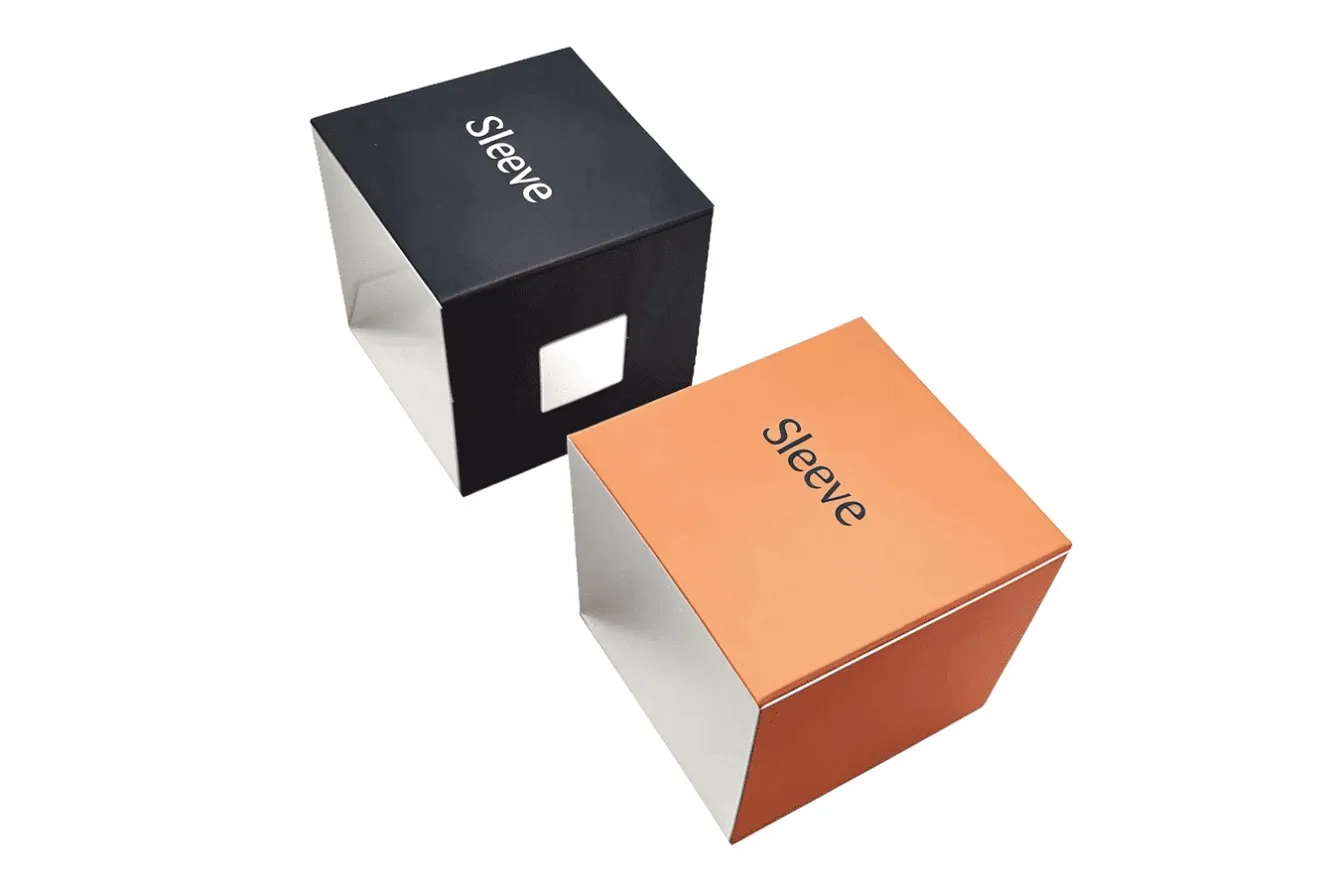
The project involved a custom printed paperboard sleeve designed to fit around an existing inner package.
The customer explained that a previous supplier had produced the same design with a looser fit. However, the new sleeves felt noticeably tighter.
The customer initially wondered whether the difference was related to the glued overlap area or the paperboard material.
Both were reasonable possibilities.
A paperboard sleeve may look simple, but its fit depends on several connected factors:
- Finished internal dimensions
- Paperboard thickness (caliper) and stiffness
- Creasing and folding accuracy
- Glue seam construction
- Actual external dimensions of the inner package
- Production tolerances
Even small dimensional differences can affect how easily a sleeve slides over another box.
Our priority was to review the structure and explore whether a dimensional adjustment could improve the fit without introducing new assembly problems.
Why the Same Packaging Dieline Does Not Guarantee the Same Fit
A packaging dieline defines the intended cutting paths, crease lines, and folding geometry.
However, it does not guarantee that every supplier will produce identical finished dimensions.
Differences in paperboard materials, die-cutting, creasing, folding, and gluing processes can influence the final result.
Paperboard Thickness Affects Internal Clearance
Paperboard has physical thickness.
When a flat sheet is folded into a sleeve, its thickness affects the relationship between the external and internal dimensions.
For example, two paperboard grades with the same nominal GSM may have different actual thicknesses.
If the dieline and folding geometry remain unchanged, thicker paperboard may reduce the available internal clearance and create a tighter fit.
Paperboard stiffness can also influence how the folded panels settle into their final shape.
Buying Tip: When switching packaging suppliers, confirm both the paperboard GSM and actual thickness. The same paper weight does not necessarily guarantee the same fit.
Creasing and Folding Tolerances Matter
Crease placement and folding accuracy influence the finished dimensions of a paperboard sleeve.
Small variations in crease position, fold alignment, or panel geometry may change the sleeve opening.
This becomes especially important when the sleeve is designed to fit closely around another box.
A design with generous clearance may accommodate minor dimensional variations.
A tight-fitting sleeve has less room for those differences.
Glue Seam Construction Can Influence the Finished Size
Many paperboard sleeves use a glued side seam.
The glue flap overlaps an adjacent panel to form the finished sleeve.
Glue placement, folding alignment, and the relationship between the adjoining panels can affect the assembled structure.
However, it is important to distinguish between two measurements:
- Glue flap width: The portion of paperboard reserved for creating the glued seam.
- Finished internal width: The usable space inside the assembled sleeve.
Increasing the glue flap width alone does not automatically increase internal clearance.
The complete panel layout and crease positions must be reviewed together.
The Inner Packaging Also Has Dimensional Tolerances
A sleeve is only one component of the complete packaging system.
The inner box or product container also has actual finished dimensions and production tolerances.
If the inner package is slightly larger than its nominal dimensions, a sleeve that previously fit well may feel tighter.
Labels, folded edges, surface finishes, and other details may also influence the fit.
Best Practice: Always test the sleeve with the actual inner packaging rather than relying only on nominal dimensions.
Our Technical Review: Why One Dimension Can Affect Multiple Panels
After receiving the customer's feedback, we reviewed the sleeve structure and discussed possible dimensional adjustments.
One measurement in the original design was approximately 14.7mm.
During our discussion, adjusting this measurement to approximately 16–17mm was considered as a possible way to improve the fit.
However, the effect of such a change depends on which structural dimension is being adjusted and how it relates to the other panels.
Changing one number on a dieline does not necessarily produce the intended change in the finished sleeve.
Why Related Panels May Need Adjustment
A paperboard sleeve is formed by folding several connected panels into a three-dimensional structure.
Its finished length, width, and height depend on how those panels interact.
If the objective is to increase one finished internal dimension, the corresponding panel widths and crease positions may need coordinated adjustments.
For example, changing the sleeve width may require modifying multiple related panels to maintain a consistent rectangular shape.
Otherwise, the finished sleeve could become uneven, distorted, or difficult to assemble.
Key Takeaway: Packaging dimensions should be evaluated as a complete structure, not as isolated measurements on a dieline.
In this project, the dimensional change was discussed as a possible corrective measure. The available project records do not confirm whether a revised sample was subsequently tested and approved.
How to Fix a Tight-Fitting Packaging Sleeve
When a paperboard sleeve is too tight, the best solution depends on the underlying cause.
A structured review can help identify whether the issue is related to the material, finished dimensions, folding process, or dieline geometry.
Measure the Finished Sleeves
Start by measuring the actual assembled sleeves instead of relying only on the original dieline.
Check the relevant internal dimensions and compare them with the intended specifications.
Measure several samples to determine whether the tight fit is consistent or varies between individual units.
Measure the Inner Packaging
Confirm the actual external dimensions of the inner box or product.
Do not rely only on the nominal measurements listed in the original artwork.
Labels, lamination, folded edges, and other features may affect the fit.
Compare Paperboard Specifications
Review the paperboard grade, GSM, actual thickness, and stiffness.
If the previous and current suppliers used different materials, those differences may help explain the change in fit.
However, material variation should not be treated as the confirmed cause without physical comparison.
Review the Dieline and Glue Seam
Check the internal opening, panel dimensions, crease positions, glue overlap, and folding alignment.
If additional clearance is required, identify which structural dimensions should be adjusted.
Avoid changing only the glue flap without reviewing how the complete sleeve is assembled.
Test a Revised Physical Sample
Before applying structural changes to a bulk order, prepare a revised sample where practical.
Test the sleeve with the actual inner packaging.
A properly fitted sleeve should:
- Slide into position without excessive force.
- Stay securely in place without unnecessary movement.
- Avoid scratching or damaging the inner packaging.
- Maintain a clean, consistent appearance.
- Allow convenient assembly during the customer's packing process.
For close-fitting packaging, physical sample testing is strongly recommended before mass production.
How Much Clearance Should a Paperboard Sleeve Have?
There is no universal clearance allowance suitable for every paperboard sleeve.
The required fit depends on several factors:
- Overall sleeve dimensions
- Paperboard thickness and stiffness
- Inner package dimensions
- Surface finishes, such as lamination
- Manual or automated assembly requirements
- Desired sliding resistance
- Production tolerances
For example, a sleeve designed to slide easily over a rigid box may require different clearance from a decorative sleeve intended to remain relatively snug.
A sleeve that is too tight can slow down packing and potentially damage the inner packaging.
A sleeve that is too loose may shift during handling and create an unstable presentation.
The goal is to achieve a controlled fit that suits the product and the intended unboxing experience.
Practical Recommendation: Approve the sleeve and inner box together as one complete packaging assembly.
Key Lessons for B2B Packaging Buyers
This case offers several practical lessons for brands, wholesalers, and importers sourcing custom packaging.
The Same Dieline Does Not Guarantee Identical Finished Packaging
A supplier may receive exactly the same artwork and dieline used in a previous order.
However, material properties, production tolerances, and assembly processes can influence the finished packaging.
When switching suppliers, buyers should not assume that the previous fit will automatically be reproduced.
GSM Is Not the Same as Paperboard Thickness
Two paperboards with the same GSM may have different thicknesses and stiffness.
These differences can affect the fit of close-fitting packaging components.
Glue Flap Adjustments Require Structural Review
The glue seam is part of the complete sleeve structure.
Changing one flap dimension without reviewing the adjoining panels may create additional fitting problems.
Physical Samples Help Prevent Costly Mistakes
Digital artwork and dielines cannot fully demonstrate how a sleeve will fit around the actual product.
Physical samples help buyers identify potential issues before bulk production.
Small Dimensional Differences Can Have a Noticeable Impact
A minor difference on a technical drawing may become significant during packing.
This is particularly important when packaging components are designed to fit closely together.
Packaging Sleeve Fit Checklist Before Mass Production
Before approving a custom paperboard sleeve, confirm the following:
- The actual external dimensions of the inner package have been measured.
- The sleeve's target internal dimensions are clearly specified.
- Paperboard GSM and thickness have been reviewed.
- The glue seam and related panel dimensions have been checked.
- Crease positions and folding requirements are confirmed.
- The sleeve slides over the inner package without excessive force.
- The sleeve is not excessively loose.
- The actual inner packaging and sleeve have been tested together.
- A revised physical sample has been approved if structural changes were made.
- The final confirmed dieline is used for bulk production.
You may also find our Custom Folding Boxes Buying Guide helpful when comparing folding carton structures, materials, and assembly requirements.
How Cherubox Helps Buyers Resolve Packaging Fit Problems
At Cherubox Packaging, we help brands and wholesale buyers manage custom packaging projects involving multiple structural components.
Our support includes:
Structural Dieline Review
Reviewing packaging dimensions, folding panels, glue seams, and assembly requirements to identify potential fitting issues.
Material Selection Guidance
Helping buyers compare paperboard specifications based on thickness, stiffness, printing performance, and packaging requirements.
Sample Development Coordination
Supporting sample preparation and reviewing compatibility between packaging components before bulk production.
Quality and Supplier Coordination
Communicating confirmed specifications, coordinating production requirements, and supporting quality reviews.
Practical Packaging Problem Solving
Evaluating dimensional mismatches and discussing possible structural adjustments based on the packaging design.
Our focus is to help customers balance packaging appearance, functionality, production feasibility, and overall project cost.
Frequently Asked Questions
Why does the same packaging dieline produce different results across suppliers?
Differences in paperboard thickness, creasing accuracy, folding alignment, glue seam construction, and production tolerances can influence the finished dimensions.
The actual cause should be evaluated by comparing physical samples and specifications.
Can paperboard thickness make a sleeve too tight?
Yes. Paperboard thickness can affect the finished internal dimensions of a folded sleeve.
This is especially important when the sleeve has limited clearance around the inner packaging.
Will increasing the glue flap width make the sleeve looser?
Not necessarily.
Glue flap width and finished internal dimensions are different measurements.
The complete dieline must be reviewed to determine which panels should be adjusted.
Is a 1mm dimensional difference important in custom packaging?
It can be.
For close-fitting packaging, even a small dimensional difference may affect assembly and sliding performance.
The significance depends on the overall box dimensions and required clearance.
Should I request new samples when switching packaging suppliers?
For close-fitting or multi-component packaging, a new physical sample is strongly recommended.
It helps confirm that the finished structure works with the actual product before bulk production.
Can a tight paperboard sleeve be fixed after production?
It depends on the structure and severity of the problem.
Minor issues may sometimes be managed through packing adjustments, but a significant dimensional mismatch may require revised packaging.
The available options should be evaluated before deciding on rework or replacement.
Final Thoughts
This case demonstrates why using the same packaging dieline does not always guarantee identical finished packaging.
A customer reported that a paperboard sleeve produced using an existing design felt tighter than a previous version.
The feedback led us to review the relationship between paperboard properties, glue seam construction, panel dimensions, and actual packaging fit.
The most important lesson is that a dieline is only one part of a successful packaging project.
Material properties, folding accuracy, finished dimensions, and physical testing all contribute to the final result.
For brands sourcing custom packaging from different suppliers, confirming these details before mass production can help reduce fitting problems, unnecessary revisions, and additional costs.
Need Help With a Custom Packaging Fit Issue?
Whether you are developing a new paperboard sleeve, switching packaging suppliers, or reviewing a dimensional mismatch, Cherubox Packaging can help evaluate your packaging requirements.
Share your existing dieline, inner box dimensions, material specifications, and order quantity. We can help review the structure and coordinate practical options for your project.